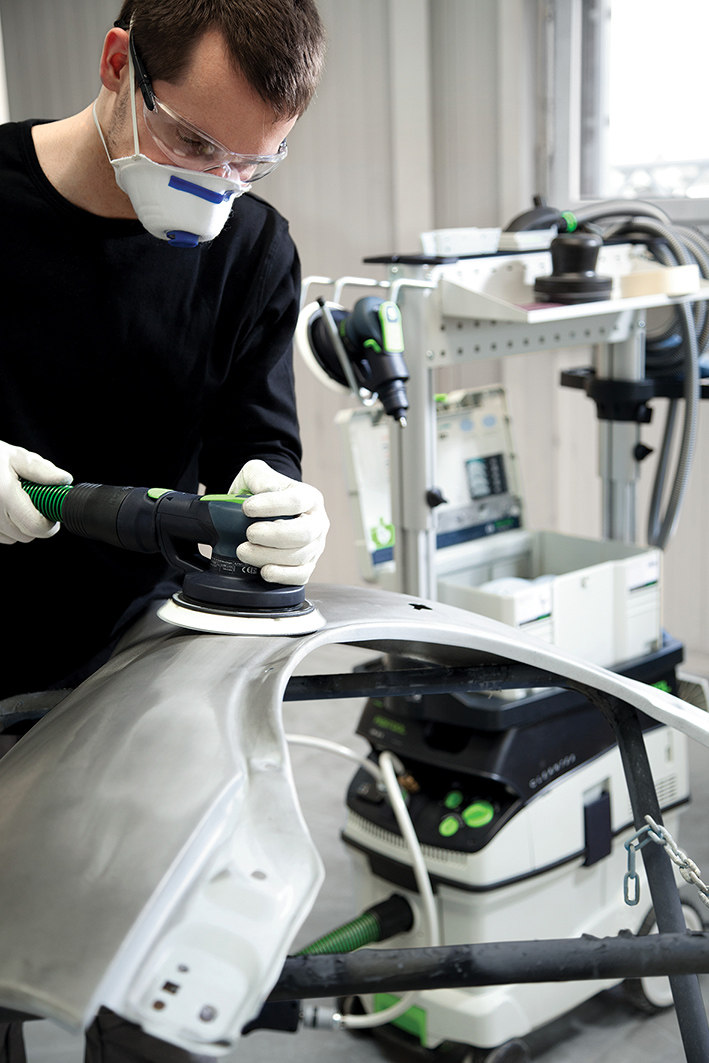
WHY IS DUST BAD FOR YOUR BODY SHOP?
Dust is highly problematic in a body shop. It causes serious health risks for technicians and ruins the quality of paint jobs. Airborne particles often contain hazardous heavy metals like lead, chromium, and aluminium, which can lead to severe respiratory, neurological, and combustion hazards.
Severe health risks
Sanding body fillers, primers, and paints creates fine dust that infiltrates the lungs, leading to asthma, irritation, and long-term respiratory damage. Dust often contains hazardous substances like hexavalent chromium and lead, which are harmful to the nervous system and linked to cancer. Airborne dusts from aluminium can be highly combustible and pose a serious explosion risk. Hardeners and resins in body fillers can cause severe dermatitis and eye irritation upon contact. Often technicians forget that the skin is the largest organ of the body and absorbs far more than we are aware of when it comes to hazardous elements.
Dust – the enemy of paint finish
Settled dust that floats onto a freshly sprayed panel causes “nibs” or “fish eyes,” creating an uneven, bumpy texture. Dust contamination often forces technicians to perform time-consuming wet sanding, compounding, and polishing to fix imperfections, or requires completely repacking and respraying the vehicle.
Having a dirty shop makes for constant reworks and long-term unhappy customers as paint defects present themselves.\
Equipment and tool malfunctions
Air lines, spray guns, and power tools and can easily be infiltrated by dust. The accumulation of abrasive dust inside equipment wears out motors and moving parts much faster and needs to be avoided at all costs.
How to prevent dust
To ensure worker safety and premium paint finishes, reputable shops utilise specific controls:
At-source extraction: Use pneumatic sanders equipped with built-in vacuums to capture dust directly where it is created.
Proper PPE: Technicians must wear proper respirators and protective clothing.
Ventilation and containment: Operate in well-ventilated preparation stations and paint booths designed to filter and extract airborne particles.
Use ventilated sanders: Equip rotary and orbital sanders with High-Velocity, Low-Volume (HVLV) local exhaust ventilation. These capture dust directly at the panel, preventing it from going airborne.
Invest in centralised extraction: Connect all pneumatic and electric sanding tools to a working dust extraction system.
Ensure your spray booths are properly pressurised. Positive pressure keeps outside contaminants from leaking into the booth and prevents dirty air from entering when doors are opened. In mobile or prep areas where extraction isn’t always possible, use supplementary industrial air scrubbers with high-efficiency filters. Regularly check and replace both exhaust and intake filters according to the equipment manufacturer’s schedule to keep airflow optimal.
Clean habits
Never use compressed air to blow off vehicles and avoid sweeping with traditional brooms. This just remobilises settled dust into the air. Clean floors, tool stands, and crevices using an industrial HEPA-filtered vacuum that is anti-static. Lightly misting or wetting and squeegeeing the shop floor is a common practice to trap dust and prevent it from going airborne.
Use heavy-duty curtains to physically separate messy prep and bodywork areas from the final paint zones. Keep doors to the spraybooth and paint rooms firmly shut to avoid stirring up dust from surrounding bays.
By Claire Macfie