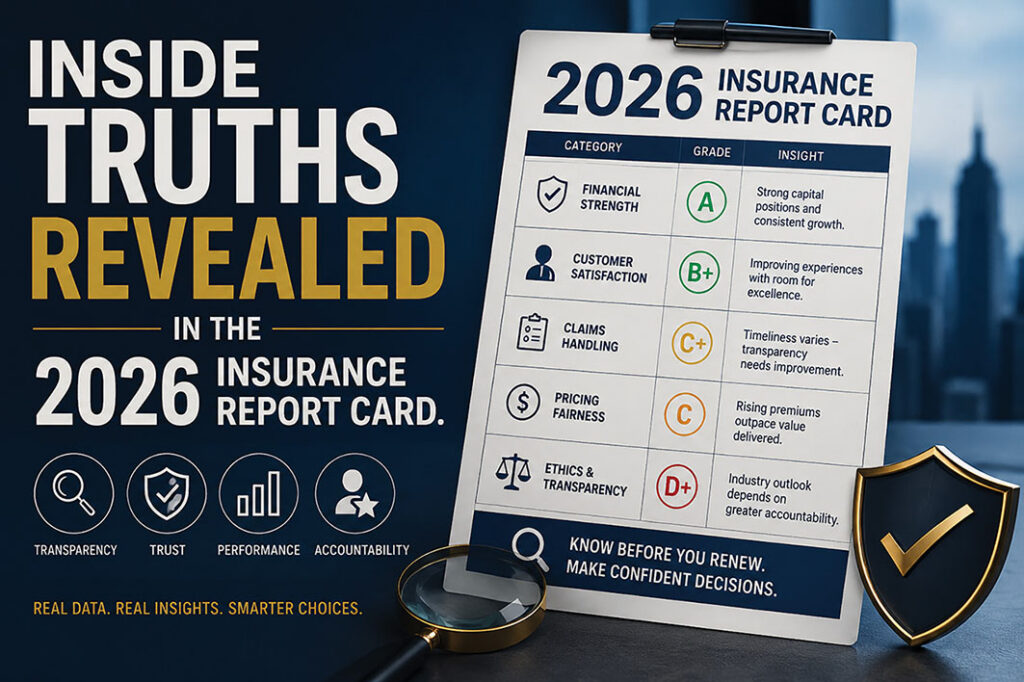
USA INSURANCE REPORT CARD REVEALS INSIDE TRUTHS
When it comes to being the most knowledgeable about which insurance companies best handle claims, it’s the body shops – not the drivers – who know best. Vehicle owners are not the ones dealing with insurance claims day in and day out. The average driver has an accident every eight to 10 years where body shops likely have eight to 10 cars in their shop per week or per day.
The truth is that the average consumer really doesn’t have a clue about which insurance companies are best. Their sources are limited. Online reviews don’t really go too far. Most drivers are not even aware that there are dozens upon dozens more insurance companies to choose from outside of the largest companies who only earn household name status due to the billions they spend on advertising to be that “good neighbour” or to be in “good hands.”
The body shops are the most informed. Collision repairers know firsthand which insurance companies put the pressure on to cut costs with parts, refuse necessary procedures and cause delays in the process.
This is precisely why the Insurance Report Card Survey is done every year. This survey which takes a shop owner only three minutes to complete, can help consumers make better choices about what insurer to use.
The survey asks collision repairs one simple question: “How well does this company’s claims handling policies, attitude and payment practises ensure quality repairs and customer service for motorists?”
The grades that shops assign insurance companies are based on customer service and quality repairs. “It’s not just about price,” said John Yoswick, during the Society of Collision Repair Specialists’ IDEAS Collide Show at SEMA. “It provides a tool for consumers to help them determine what is the right insurer for them.
“Consumers don’t have much basis to compare a claims experience with one insurer to another since most of us go years, on average, between claims.” Yoswick stated when the 2026 Insurer Report Card was published. “That’s why many drivers make their insurance choice based largely on price or name familiarity, choosing one of the insurers whose ads they see everywhere. We see the “Insurer Report Card” as a way for collision repairers to communicate to consumers what shops see every day in terms of which companies are better at taking care of policyholders when they have a claim – and which ones have room for improvement.”
The most recent survey revealed seven insurance companies received “B” or higher to earn a spot on this year’s “Honour Roll.”
The survey also revealed that 22 companies, including six of the largest national auto insurers received an overall grade higher than “C+” with more than 60 other companies scoring higher!
So, which three insurers made the top of the list?
In the 2026 survey, seven insurance companies achieved a grade of “B” or higher to earn a spot on the “Honour Roll.” Additionally, 22 companies—including six of the largest national auto insurers—received an overall grade higher than “C+”, while more than 60 other companies scored even higher.
The top three insurers on the list include: North Carolina Farm Bureau, which earned the highest “A+” rating despite being offered exclusively in its home state. Alfa Mutual (available in Alabama, Georgia, and Mississippi) and Chubb (offered in many states, including the Mid-Atlantic region) both earned a straight “A” rating.
The report also identifies top insurers by specific regions. Within the WMBA’s territory—which includes the South region of Virginia and West Virginia, alongside Maryland in the Northeast—PURE Insurance secured a spot on the 2026 Honour Roll with an “A-” grade. Meanwhile, the survey results indicate that for the large national insurance companies spending billions on advertising, the claims situation is “not getting better.”
More than 1000 body shops around the country each graded as many as 40 different insurance companies in their state. Those they gave the highest scores were considered to be better than others in terms of claims processes, appeared to have more experience and responsible claims personnel, paid for OEM repair procedures and did not pressure shops to cut corners with cheaper replacement parts. Lower scores were mostly because shops experienced companies “taking forever” to review claims, refusing to pay for quality parts, fought shops on automakers procedures and had “poorly trained staff.”