THE THING ABOUT DEEKS
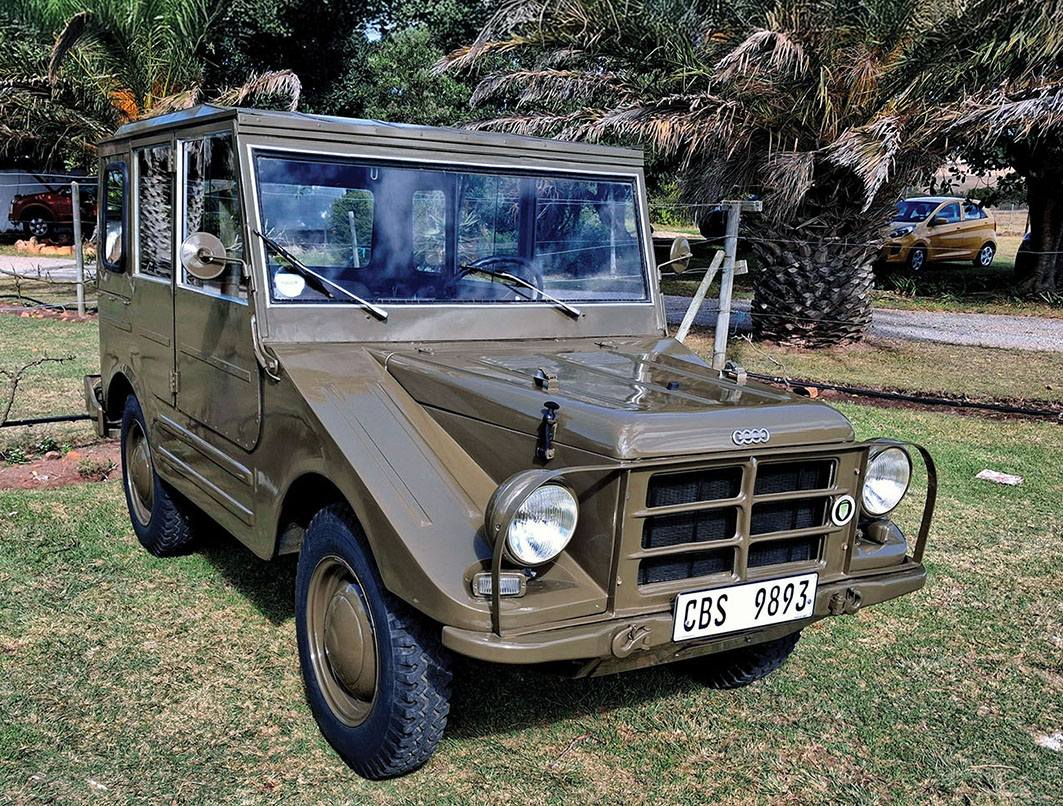
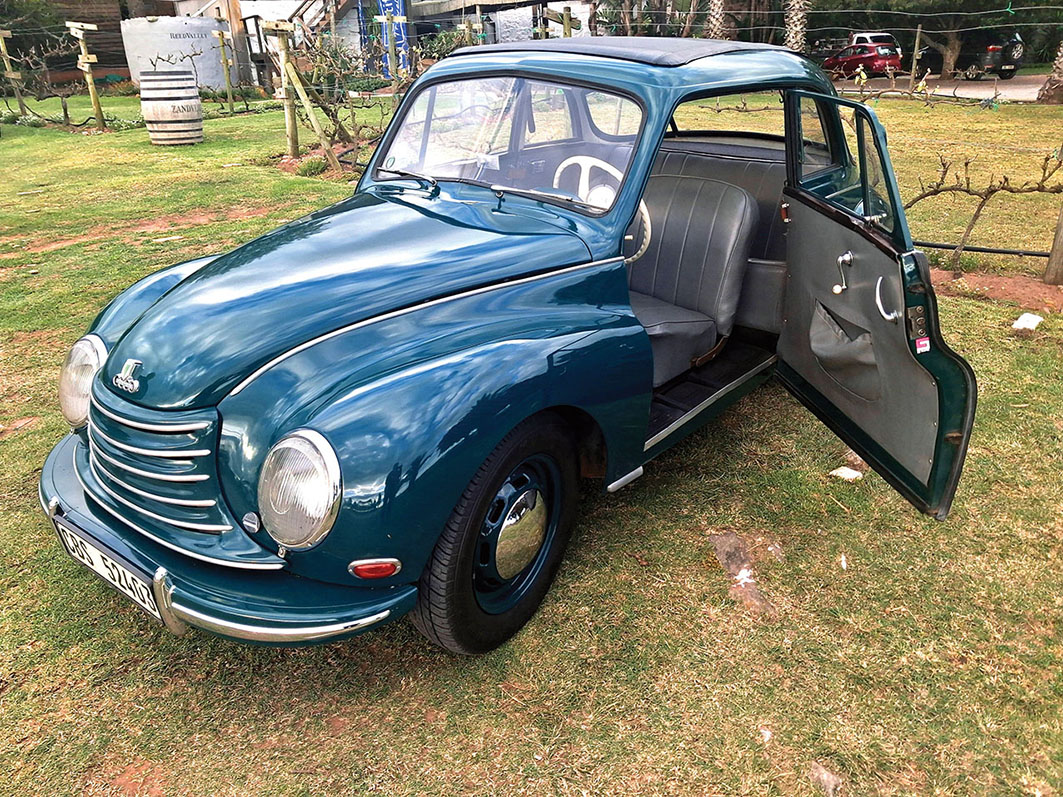
Funny thing is, growing up in Pretoria in the 1960s, my mates and I used to think DKWs were slow. Those funny duck-shaped cars used to wheeze around with a comical asthmatic engine note, punctuated by a popping from the exhaust when the driver changed gear. How could you take them seriously?
The reason for the ‘ting-a-ling’ popping was that all DKWs were powered by two-stroke engines, and those of you who remember racing two-stroke motorcycles will know that when the rider closed the throttle, the exhaust pipe used to issue a popping sound on the over-run. For this reason, when you mention a DKW to people who remember them, nine out of 10 will immediately go into an impromptu comedy act attempting a rendition of that ‘ring-ting-ting-exhaust’ pop.
Just about all the DKWs we saw trundling around Pretoria way back then were driven by solid family citizenry and a large contingent of old gents and little-old ladies, who used them extremely conservatively. Because of their strange engine sound, which also seemed to indicate they lacked low-down torque, we dismissively assumed that in the performance stakes DKWs were non-entities.
That perception changed one Saturday afternoon, when my life-long bud Neil and I were ensconced in a reasonably hot little Mini owned by Neil’s older brother Roger. We were batting along the old undulating Pretoria-Delmas Road nudging around 130 km/h on the downhills and revelling in the fact that this little tweaked Mini was indeed a car that punched above its weight. So, imagine our surprise when we saw this strange duck-shaped car (I still remember it was light blue) looming large in the Mini’s mirrors at an alarming rate. And even before we could remark on this threat, this Deek flashed past us at least 145 km/h and simply disappeared over the horizon.
It was only later when I became immersed in the classic car scene that I realised that in the late 1950s and early 1960s, if you were serious about winning rallies, the car to have was the funny duck-shaped DKW. In 1961, ’62 and ’63 Pieter and Reinhard Muhl of Rustenburg scored a hat-trick of South African Rally Championship victories in their DKW, or, more accurately, their Auto Union 1000S.
The Auto Union factor came into play when DKW upgraded their late 1950s DKW Sonderklasse cars from 900 cc to 1000 cc and re-introduced the Auto Union nameplate to these German cars. Essentially, they were simply slightly modernised DKWs that had been in production since the early 1950s, and unsurprisingly everyone and their dogs still referred to them as “Deeks”.
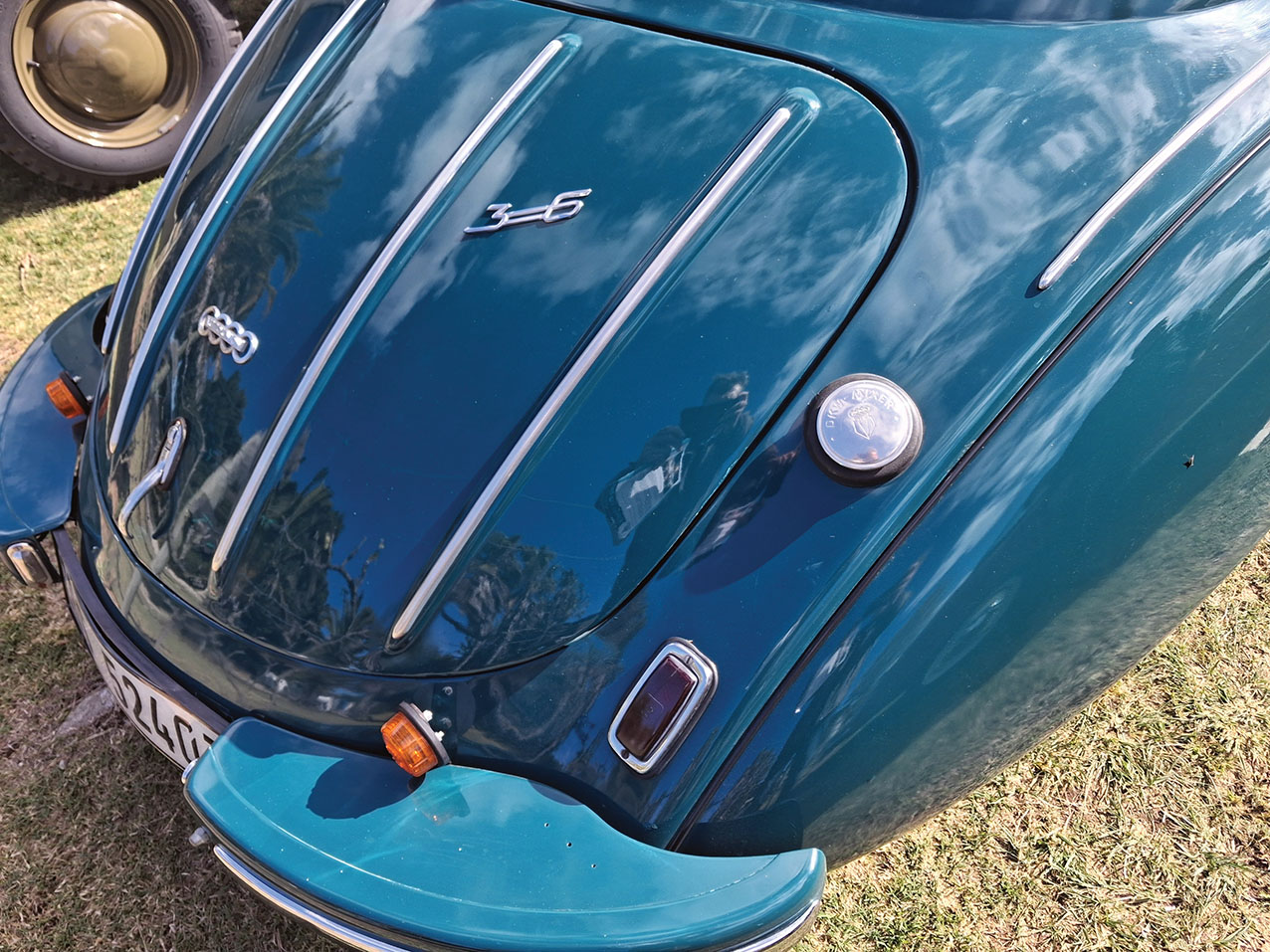
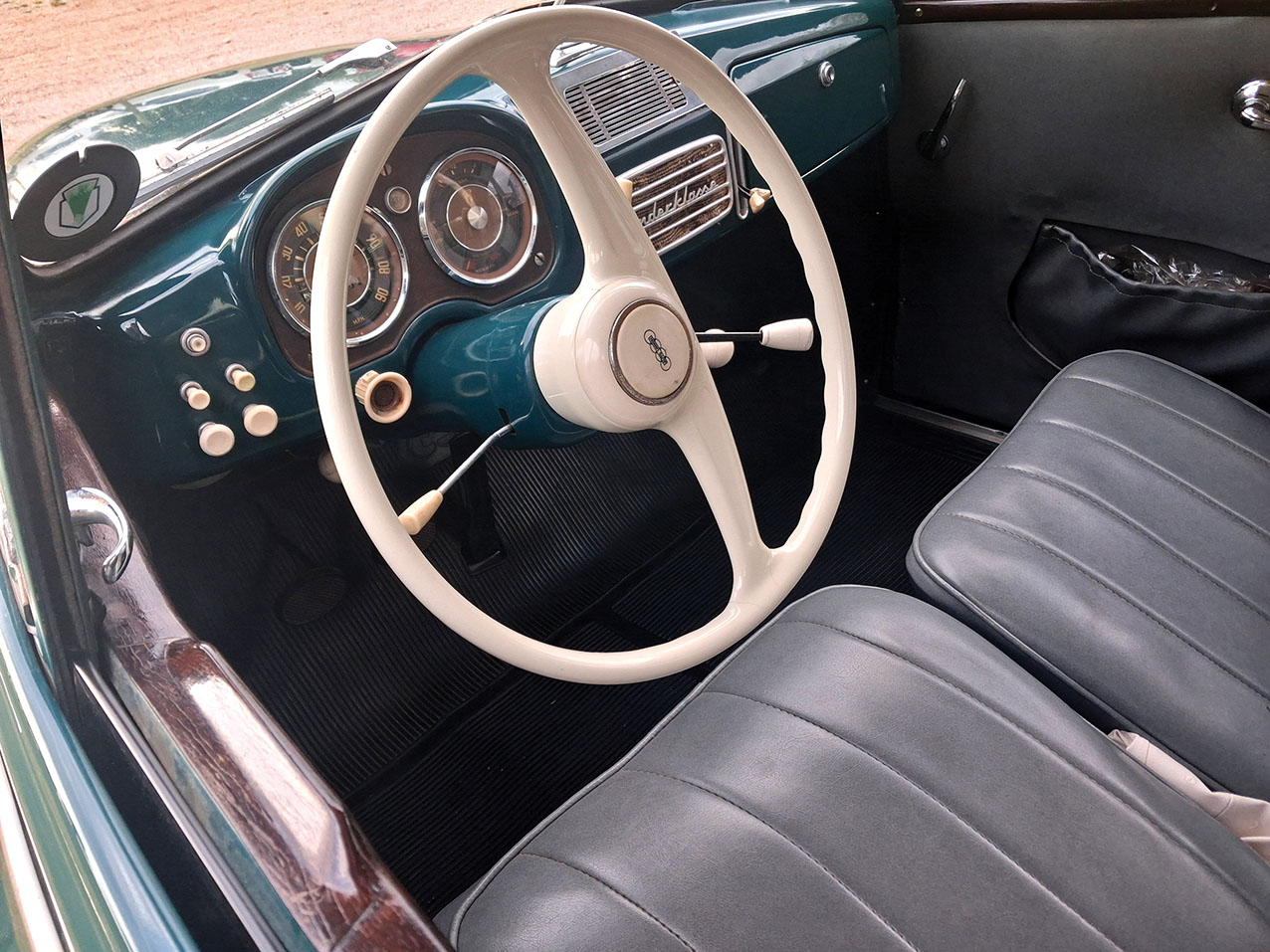
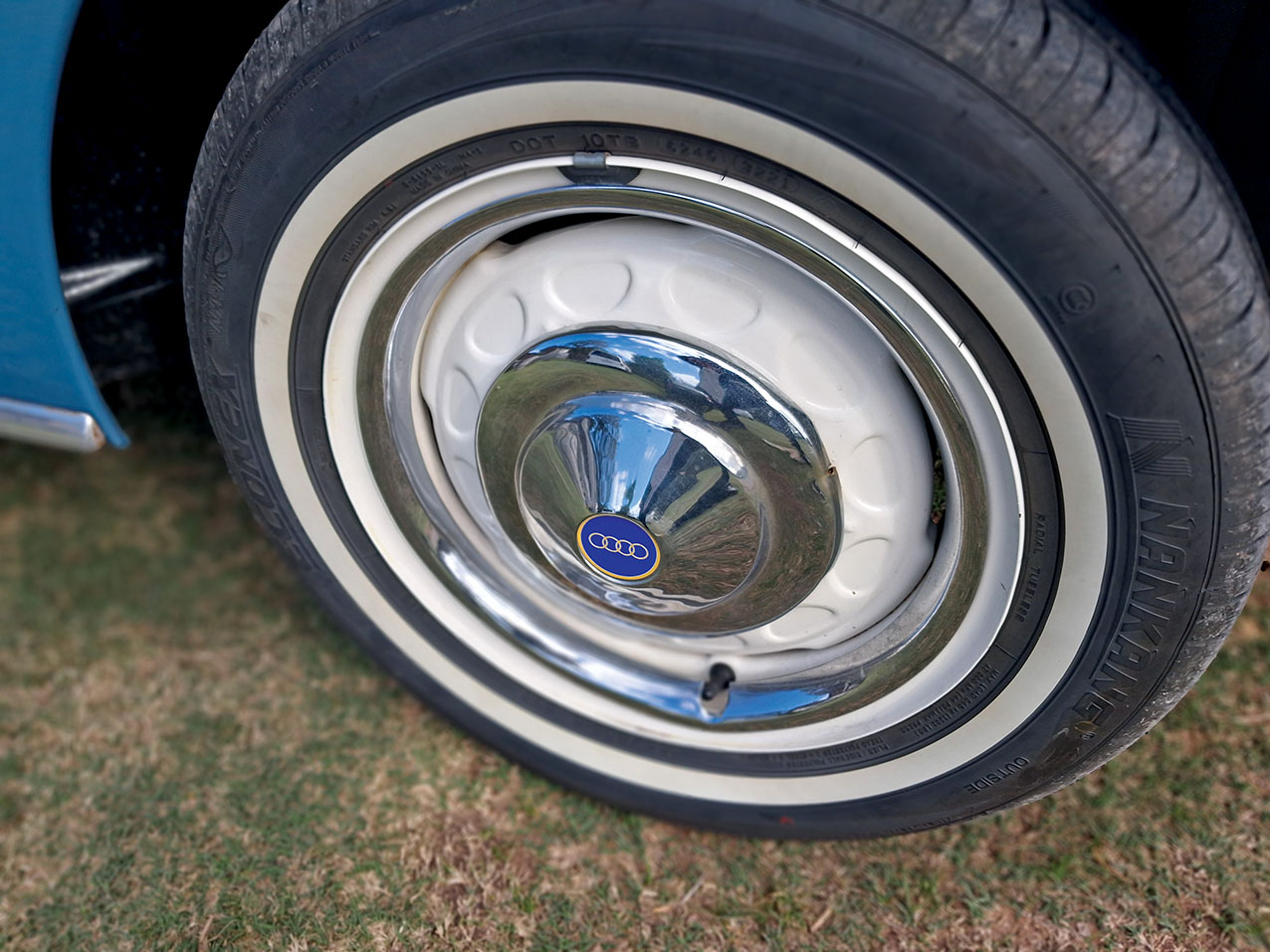
But the four-ringed logo that was present in an understated manner on the earlier DKWs now had more prominence, which was fitting as Auto Union was the holding company of the DKW brand and had been since the 1930s. That’s when Auto Union came about after four prominent German car companies – Audi, Wanderer, Horsch and DKW, joined forces to form Auto Union, and first used the famous four-rings symbol that is still prominent on modern day Audis.
I have often been amused at old car shows when newcomers to the classic car world notice the four-ringed symbol on Deeks and exclaim: “Look, an early Audi!” They are right in essence, but to explain the complexities of the DKW history and its connection to modern day Audis would cause an instant eye glaze, so I simply nod my head.
Another interesting badge on the earlier Deeks is the one that proclaims “3=6”. This refers to a marketing programme established by DKW to assure customers that by buying a two-stroke three-cylinder car displacing only 900 cc, they were effectively getting the equivalent of an 1800 cc six-cylinder car. The reason for this is that two-stroke engines have twice as many power strokes as four-strokes, and the performance of these little cars was in fact right up there with the likes of six-cylinder cars of twice the capacity.
Today I am amazed at how many DKWs are still running around in near perfect condition, and there is a good reason for this. Firstly, the build-quality of these cars in terms of panel-fit, upholstery, paint and rustproofing proved quite exceptional for its time. Volkswagen Beetles of the period were known for their fine build-quality, way ahead of the equivalent British-built offerings of the time. But the Deeks were simply in a different league.
This is no doubt why most of them were driven slowly by conservative owners, who were aware of how much they cost compared to an equivalent Anglia, Morris Minor or Austin A40s. The DKWs were priced more in the direction of the six-cylinder Ford Zephyr, and in light of this, that 3=6 marketing slogan makes so much more sense!
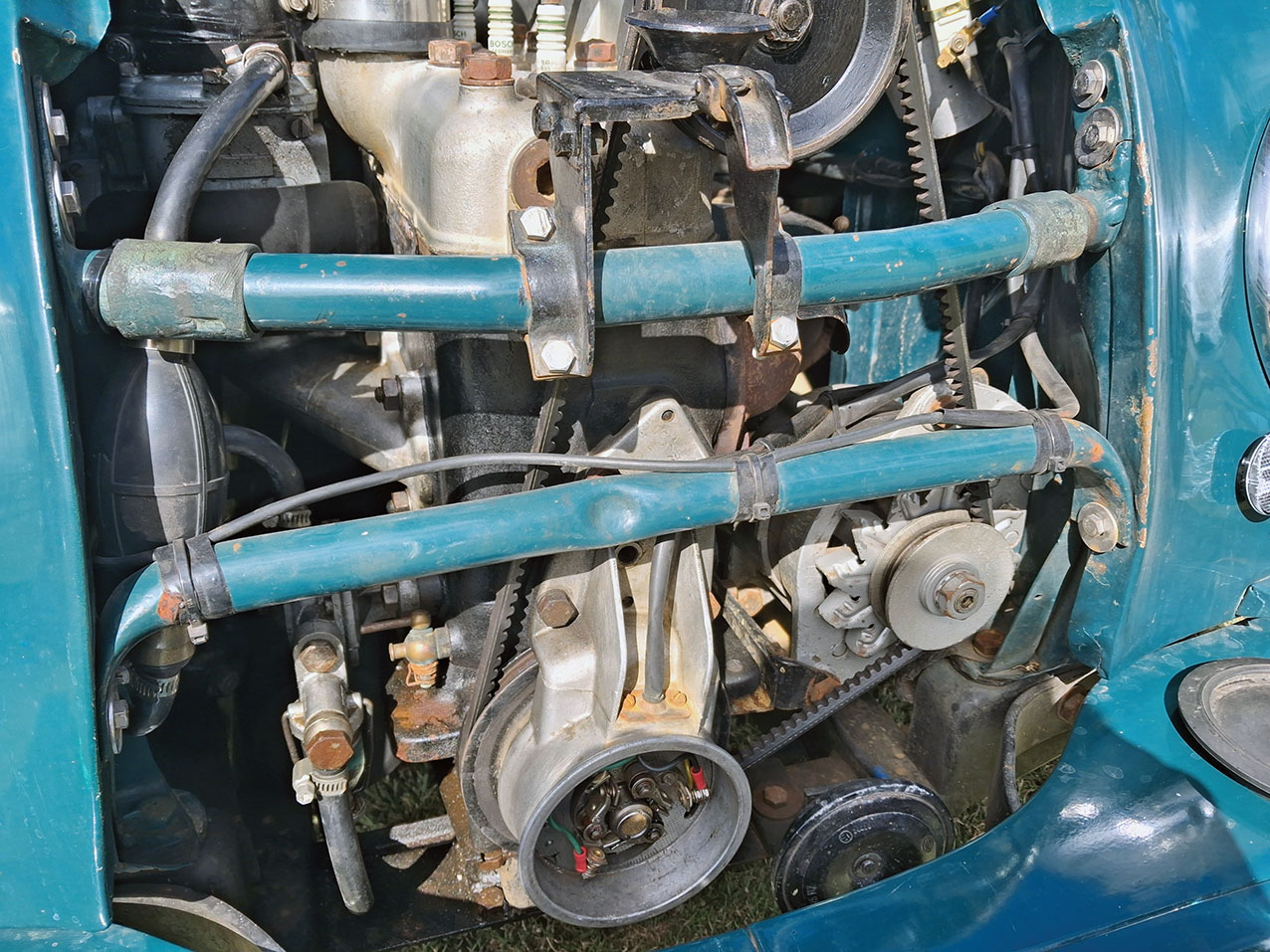
Now, in 2025, that two-stroke engine configuration makes a whole lot of sense for collectors too. There are only about half dozen moving parts in these simple engines – no valves, pushrods, timing chains or even water pumps to go wrong due to a lack of maintenance.
As long as you introduce the right amount of two-stroke oil to the fuel tank at a ratio of about 40:1, you are in business, and with very little visible exhaust smoke.
The two-stroke principle works on the idea of introducing the air-fuel mixture straight into the cylinders beneath the descending piston, which then squeezes that mixture into the sealed crankcase and subsequently up into the combustion chamber in the cylinder head.
This is achieved via channels on the side of each cylinder, known as transfer ports. So, while a new charge of fuel mixture is being fed into engine below the piston, simultaneously the previous charge of fuel mixture is now being fed into the combustion chamber, which when ignited by the spark plug, introduces a new power cycle. This forces the piston down, which squeezes the new charge of air-fuel into the crankcase, and up into transfer ports.
On the piston’s way up again, it forces the spent gases out of the engine via a simple exhaust port in the cylinder. This whole simultaneous process occurs for every revolution of the crankshaft, while a conventional four-stroke engine only has a single power stroke for every two crankshaft revolutions.
As for the rest, well-configured suspension, a four-speed gearbox and front-wheel-drive, as well as rugged construction, made these cars regular winners on our rough South African gravel roads.
Unfortunately, DKW was sold to Mercedes-Benz in the late 1950s, which very soon moved the brand along to Volkswagen, and so the fantastic DKW era came to a halt in the late 1960s, as Volkswagen appropriated the four-ringed logo and reintroduced the Audi brand in 1968 after a break of some 50 years. But yes, one way or another, if you spot the four-ringed logo on an antiquated duck-shaped little saloon car the next time you are at a classic car show, you would be able to make a solid case that what you are looking at is a 70-year-old rendition of a modern Audi.
Story and pics by Stuart Johnston