THE STORY BEHIND MASKING TAPE WHEN PAINTING CARS
If you’ve ever painted a room, you may have some in a kitchen drawer. If you refinish cars, you likely keep several specialised varieties close at hand. It’s unlikely you’ve given much thought to where it came from, because it feels like it’s always been there. However, masking tape has a story – and it turns 100 this year.
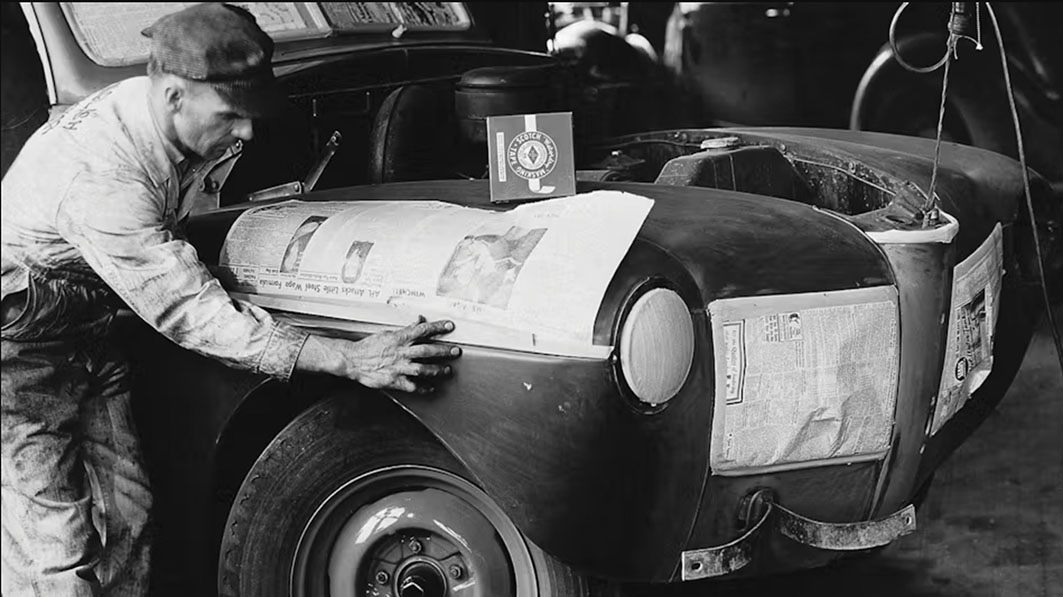
It was in the auto body shop that the story originally began. We’ve all heard the Henry Ford quote about offering cars in “any colour the customer wants, as long as it’s black.” But in the early 1920’s, the two-tone boom caught on, and painting sharp lines between the colours posed a challenge for auto refinishers.
To paint two-tones, they had to mask one area to paint the other. The combination of newspaper and honey was too messy. Library paste held, but it ripped paint off when they removed it. Stiff Kraft or butcher paper tore instead of curving. Sometimes technicians just held paper against the surfaces with their hands. As the finish became more popular, the people tasked with creating it found the process frustrating.
Richard Drew was a frequent visitor to those body shops. A young 3M salesman tasked with delivering sandpaper samples, he heard the string of “profanity emanating from the corner of the shop,” as he later recalled. He knew his employer already used adhesives to bond sand to paper. What would happen if they left out the sand?
Drew’s 3M boss, William McKnight, gave him the go-ahead to experiment with new combinations of paper and adhesive during part of his work hours. Two years passed with no success. McKnight told him to stop. Drew did not.
The breakthrough came in 1925, when Drew used paper with a cropped backing and paired it with a mixture of cabinet glue and glycerine. Sticky enough to do the job, gentle enough not to damage the paint, and flexible enough to conform to surfaces without tearing, the new innovation – Scotch Masking Tape – was a hit.
However, Drew wasn’t finished. A few years later, he created another adhesive tape – this time with cellophane, not paper. At almost the same moment that the Great Depression forced American households to be thriftier, the new Scotch Tape helped people fix items instead of throwing them away, and its popularity grew.
The demand was so great, and 3M was so busy producing Scotch Tape, that it weathered the Depression with no layoffs. Drew’s persistence in creating the first masking tape led directly to the 15% culture of innovation that gives today’s 3M employees the freedom to follow their passions and work and spend 15% of their work time developing game-changing innovations. And as masking tape celebrates its 100-year anniversary, the next time you reach for the roll in your kitchen drawer, you now know where it came from.