THE STAR OF THE SHOW
One of the questions I am often asked at a car show is: “Which car, to my mind, is the star of the show?” It’s a question I never answer directly, not because I don’t want to give anything away, but because, to me, it’s like asking: “What is your favourite Bob Dylan song?”
The answer to the Bob question is that I have so many favourites, and to lock down one particular song over a career that has spanned some 60-something years and over 800 songs, is impossible because I like so much of his stuff for different reasons, and all of them are unique!
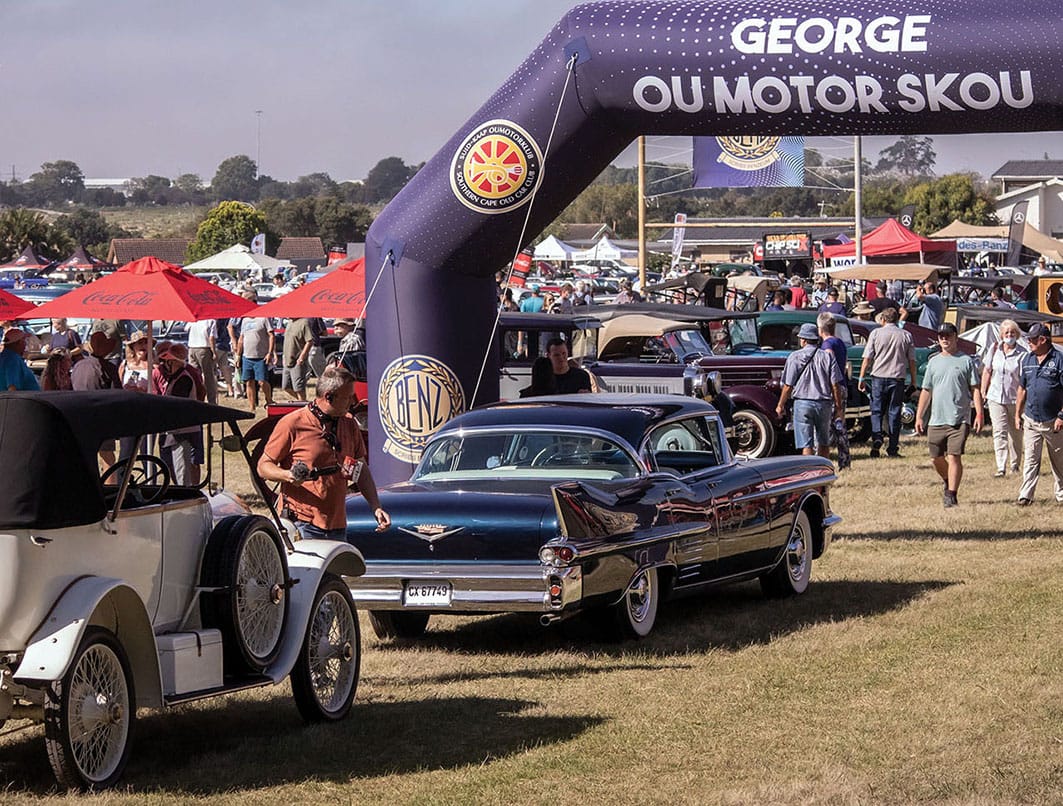
The same goes for cars. At the recent 2025 George Old Car Show there were over 1 000 classic vintage-and-veteran cars, motorcycles, trucks along with a whole bunch of tractors and farm implements. The thing is, once something attracts you to a car and you stop to absorb its splendour, really drink it in, then for that moment, this is the car that is your favourite.
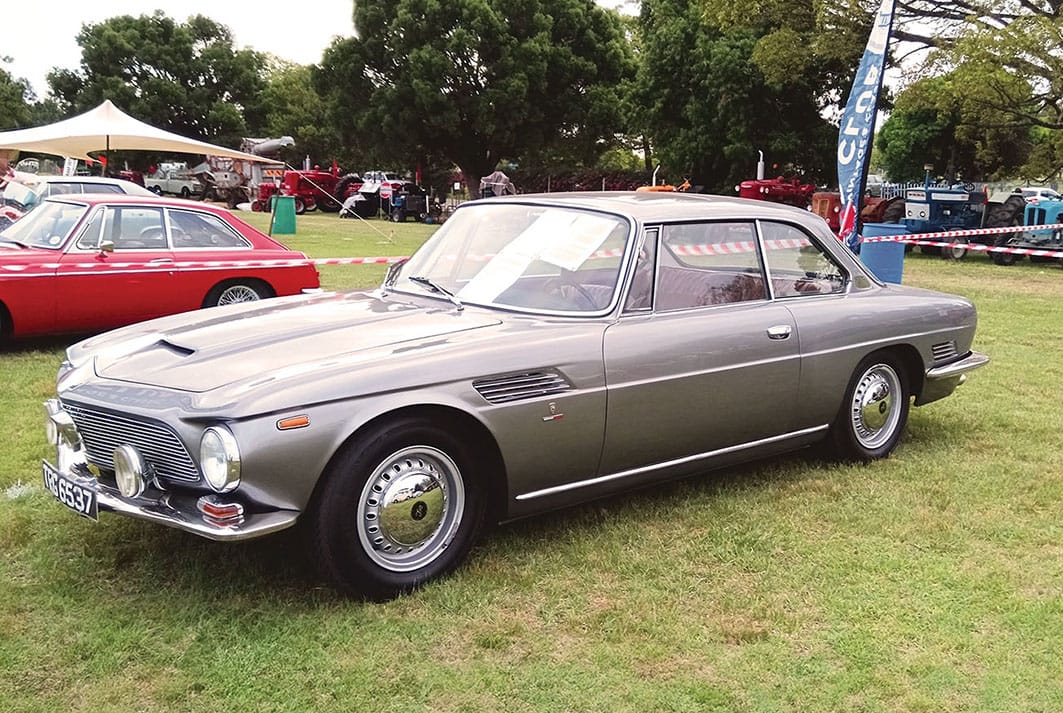
Having said that, there were a number of cars jam-packed into the fields at the Eden Technical High School that were indeed worthy of special note. One of these was a car I thought I’d never see in the metal, but had only read about, seen pictures, and that was the 1964 Iso Rivolta parked in an unremarkable spot close to the main entrance on Field A.
The Iso Rivolta was a huge surprise to the motor industry at large when it was introduced in 1962, because, until that time, the Italian Iso company was best known for building motor scooters and the archetypal bubble car of the 1950s, the Isetta. It was indeed a bold step when Renzo Rivolta decided his next trick would be to take on the established players in the world of Gran Turismo vehicles – Ferrari, Maserati and the likes – and build something that would bear scrutiny in such a demanding niche market.
Rivolta was a man of vision, and this he proved when he employed former Ferrari key player Giotto Bizzarrini to do the design work, and Bertone to do the styling. In fact, this was one of the first cars that Giorgetto Giugiarro (later of VW Golf design fame) had a hand in, and the lines of the Rivolta have proved to be timeless.
The Iso Rivolta IR300 in George is the only example known in Africa and has spent the past seven years undergoing only a mild a refurbishing in Port Elizabeth. It is absolutely original, still wearing its original steel rims and hubcaps. It is powered by a 327 cubic inch Chevrolet V8 – good for 300 horsepower – so giving the car a bullet-proof, un-temperamental engine, and it boasts a well-sorted chassis cloaked in the clear, clean, crisp lines that Giugiarro would become famous for, a few decades later with his Ital Design company.
Apparently the Rivolta was imported by an ex-pat British couple to Johannesburg as-new in the ’60s and it is essentially a one-owner car that spent most of its life in storage. This unmolested originality somehow shines through and gives the car an as-new aura that is incredibly difficult to recreate in a restoration process – no matter how expert.
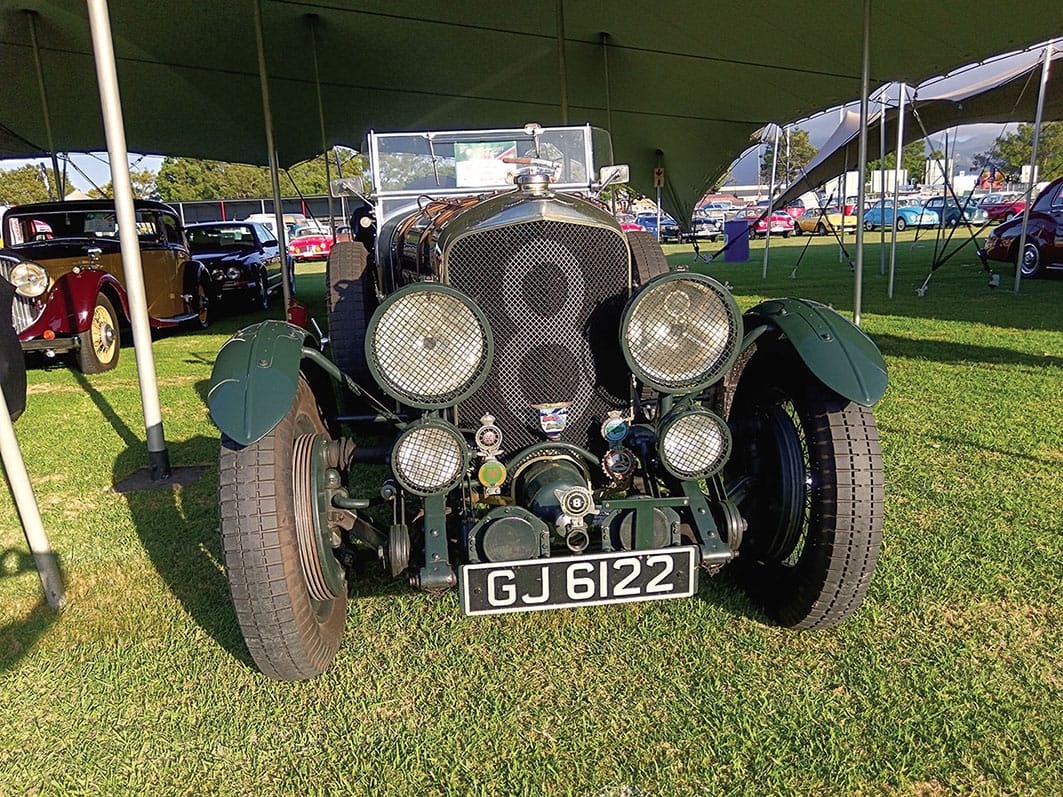
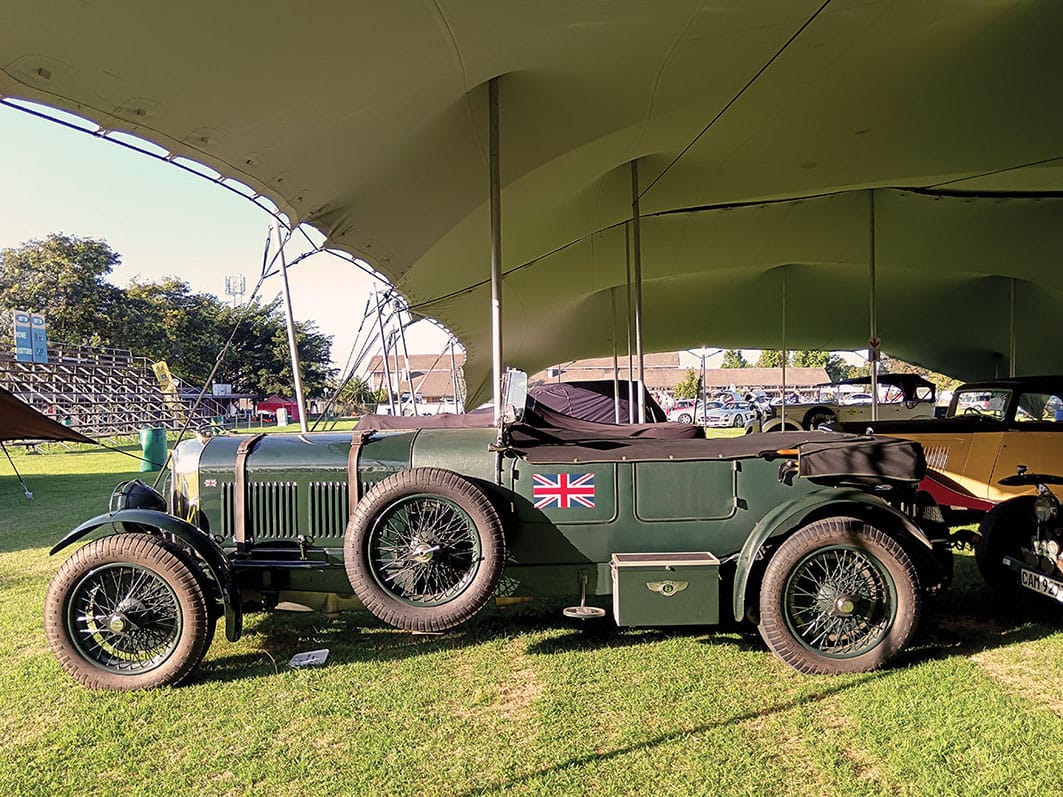
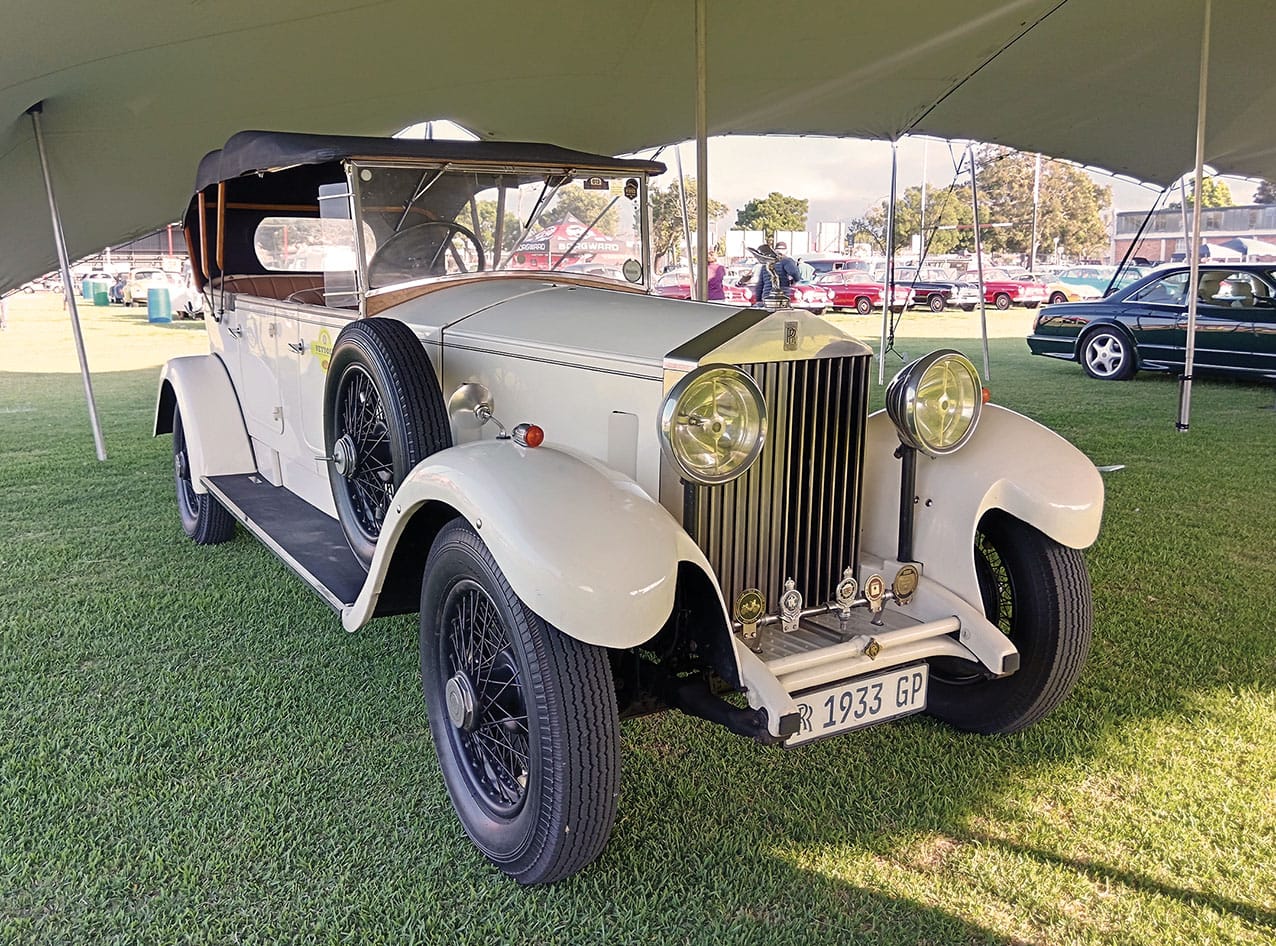
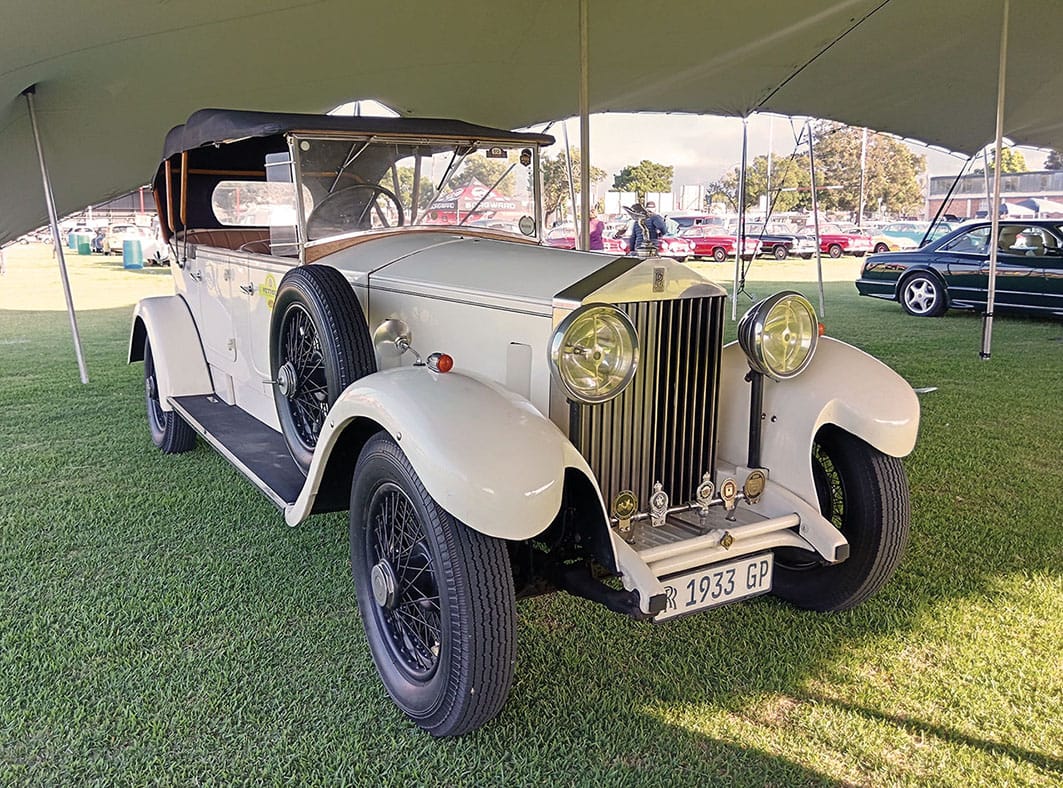
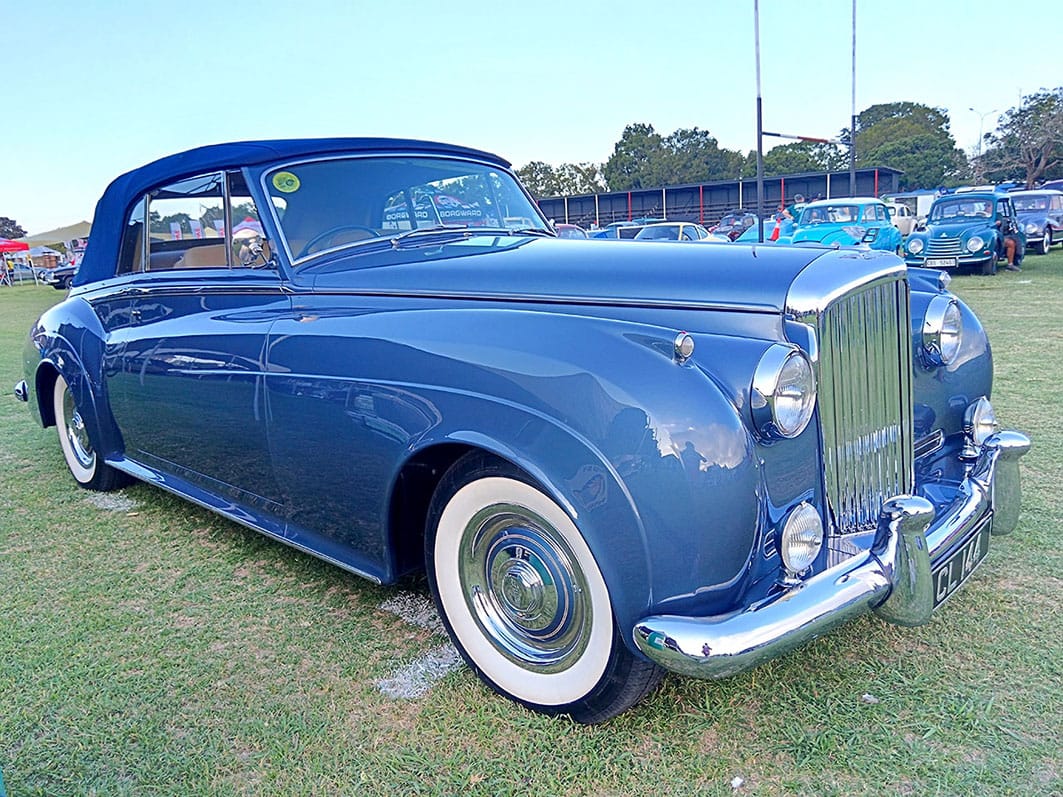
The 2025 show had a British Theme, and it was notable for a collection of over 20 Rolls-Royce- and Bentley models dating from way back to the early 1920s, and yet featuring modern examples just a few years old. For decades Rolls-Royce was acknowledged as “the best car in the world” and this might well be still the case, depending on your perspective.
The British theme was well-publicised before the show and it brought out some rare true-Brits that don’t often get public airing. One of these was a 1912 Rover Colonial, a massive car complete with an evocative warrior-like radiator mascot and an imposing presence dramatised by a pristine paint job in white. Another rare Brit not often seen in the Vintage section was a 1926 Bull-nosed Morris Cowley, with its extremely distinctive radiator section – unlike any American or European cars of that period (hence the Bull-nosed sobriquet).
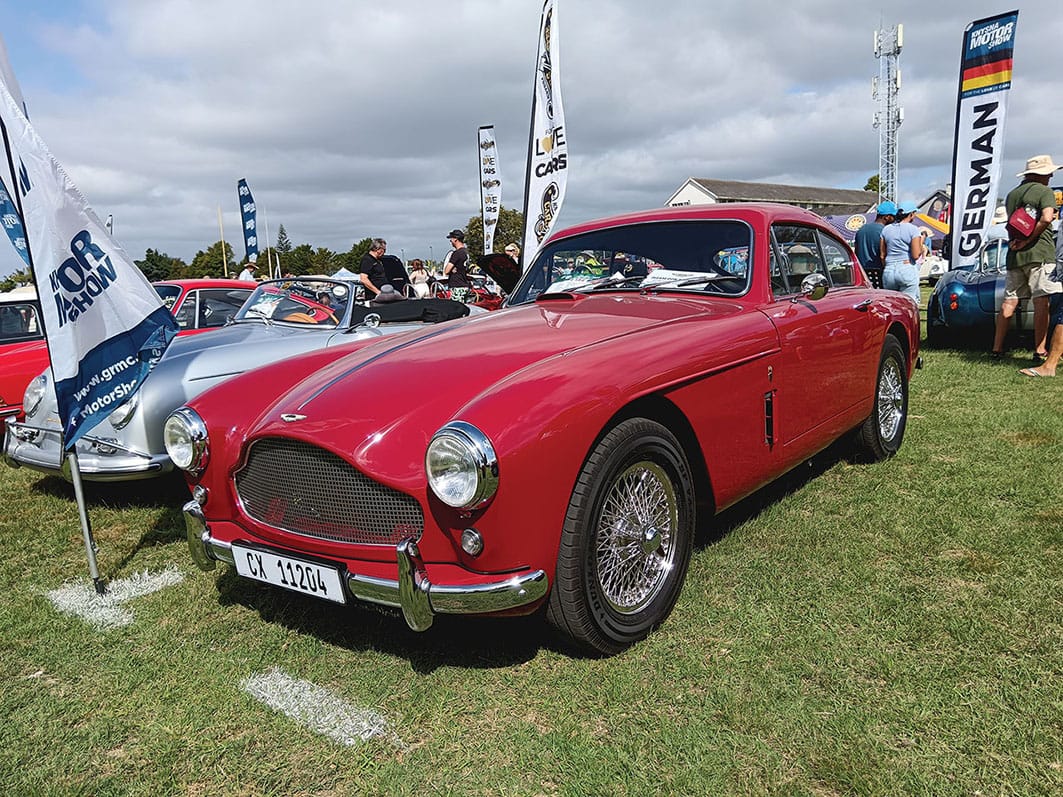
A car that couldn’t fail to catch the eye was the curvaceous red 1958 Aston Martin DB2/4 Mk III owned by Mark Barendse of Knysna. This car was discovered in a tatty state on a smallholding in Vereeniging in the 1970s, where it was doing duty carting loads of hay to the horse paddocks!
Mark’s Aston is one of just five known to be in South Africa, and it is interesting that this model Aston was the car that Ian Fleming, who wrote the original James Bond books, used as a vehicle for his high-tech spy-tech gizmos, such as extending wheel spikes, smoke screens and an ejection seat, that was later applied to a 1964 Aston Martin DB5 when a movie was made of the novel Goldfinger.
It was heartening to see the extra effort that so many owners of British cars made to attend this year’s show, and of course there were dozens of Morris Minors, MGs, Triumphs, Minis, and Austin Healeys peppered around the fields.
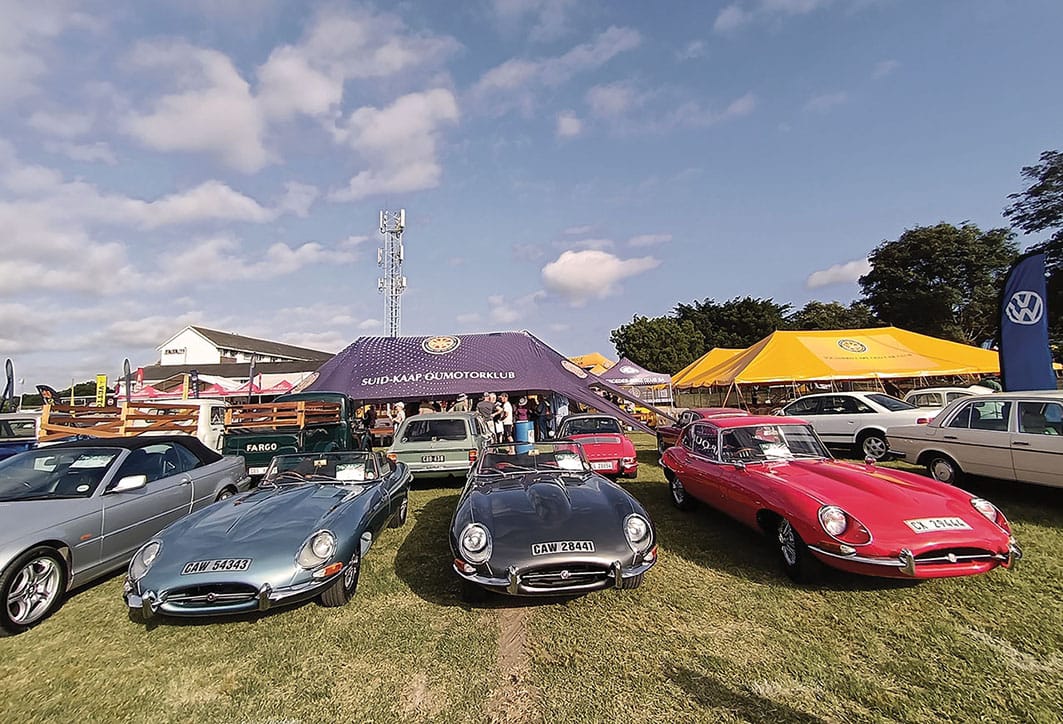
Then there were a number of Jaguars, notably the astoundingly beautiful E-Type models that became one of the sex symbols of the motoring world in the sexy-1960s, a period when popular culture tossed aside all the established behavioural mores that had been with us for centuries and issued in an era that was perhaps most aptly summed up by the slogan, sex, drugs and rock-and-roll.
The American motoring magazine Road &Track wryly noted the effect that a Jaguar E-Type had on the populace when it showed a picture of an example that had been customised with extremely ill-advised and amateurishly executed accoutrements, such as air-dams, wheel-arch flares and aftermarket mag wheels: “Bob,” said the caption, “had finally managed to create an E-Type that actually repelled women.”
A car that holds a special place in the heart of one lady visitor to the George Old Car Show was the Austin Healey Sprite. Vickee Fleetwood of East London inadvertently led the parade of British cars around the A-Field that would sign off the show late in the afternoon. She was behind the wheel of a bright yellow Sprite that she and her husband Wayne had restored just in time for this year’s show,
When stopped by the show announcer (yours truly) to discuss her car as she approached the main arena area Vickee explained that she wasn’t intending to lead the parade, but was actually trying to find a way out of the grounds, as she had to drive back home to East London, and night-fall was fast approaching!
Nevertheless, she relented to speak into the mic, explaining that the Austin Healey Sprite was particularly dear to her as it was the first car that her father had ever owned, back in the early 1960s.
There is much to talk about when it comes to the original Sprites, notably the popped-up headlights on the bonnet that gave the car its “frog-eye” nickname that has endured for the last sixty-something years. Apparently, the headlights were supposed to be retractable, but cost-cutting measures saw the lights simply fixed upon the bonnet, giving the Sprite an enduring, and endearing, startled look. Another cost-cutting measure was the fact that the rear of the car had no opening boot lid, so to get the spare wheel out or luggage, you had to flip the seat backrests down and rummage around in the darkness of the luggage area, trusting more to luck than good vision to discover what you had secreted in the loading area. Such are the details that emerge about each and every old car that arrives at a classic car show, once you get down to exploring the history of the vehicle, and chatting to the owner!
It’s worth considering the amount of time and effort put into rescuing each and every one of the cars that form the greater classic car community, and honouring the passion of the owners, whether they be driving a Rolls-Royce, a VW Beetle or a Mini.
For that reason, I think that each and every car that makes it to a classic car show is a star in its own right. As for my current favourite Bob Dylan song, it’s going to have to remain, like the title of the latest Dylan movie has it: a “Complete Unknown.”
Story and pics by Stuart Johnston