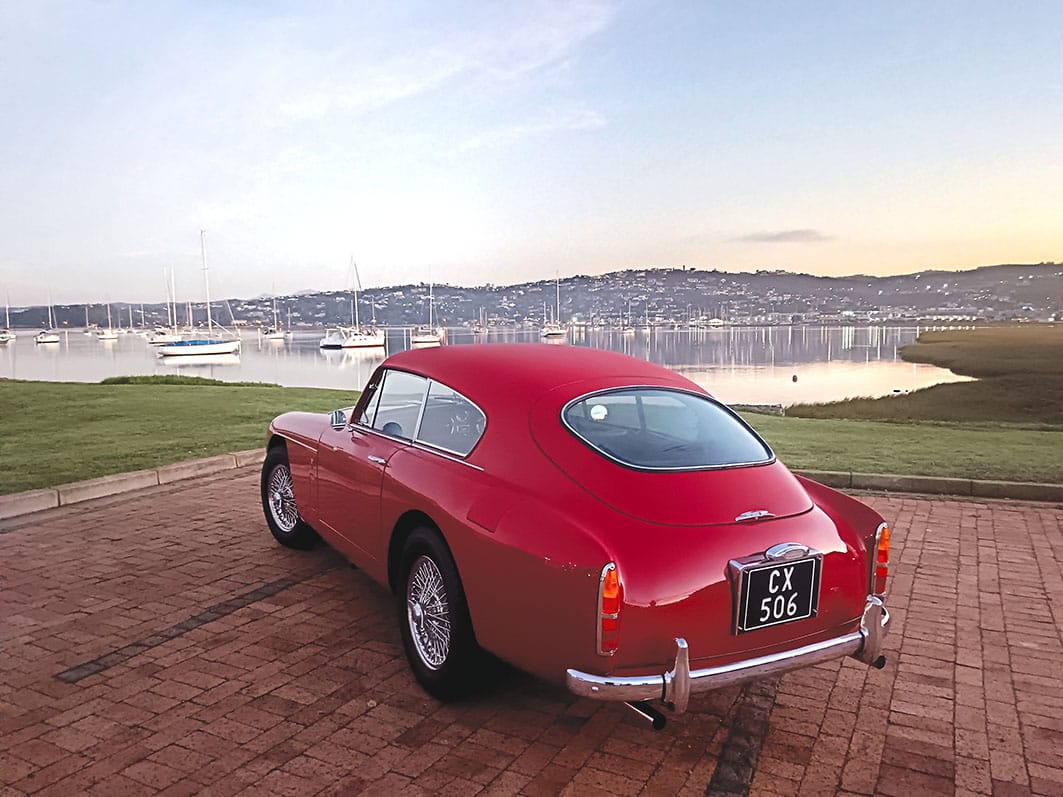
THE REAL BOND MOBILE ASTON MARTIN DB 2/4 MKIII
We are burbling along the road out of Knysna with the lagoon on our left, and I glance across at Mark Barendse and wonder what it must be like to own one of the most beautiful cars in the world. I also wonder if he has any James Bond images scrolling through his mind as he shifts the Aston Martin gearbox from second to third. That gearbox is a work of art, and that’s no surprise because David Brown, the man who bought Aston Martin company in 1948, was a gearbox manufacturer before he entered the high-priced Gran Turismo end of the sports car market.
But what has James Bond got to with this DB 2/4 Mk III model? You may well ask, because nearly everyone and his dog knows that the most famous Aston Martin of all was a gold DB 5, as depicted in the movie Goldfinger in 1965. The thing is, writer Ian Fleming wrote the Goldfinger book in early 1958, the very same year that Mark Barendse’s Aston was built, and so, in terms of accuracy, this is the car that should have been used in the movie.
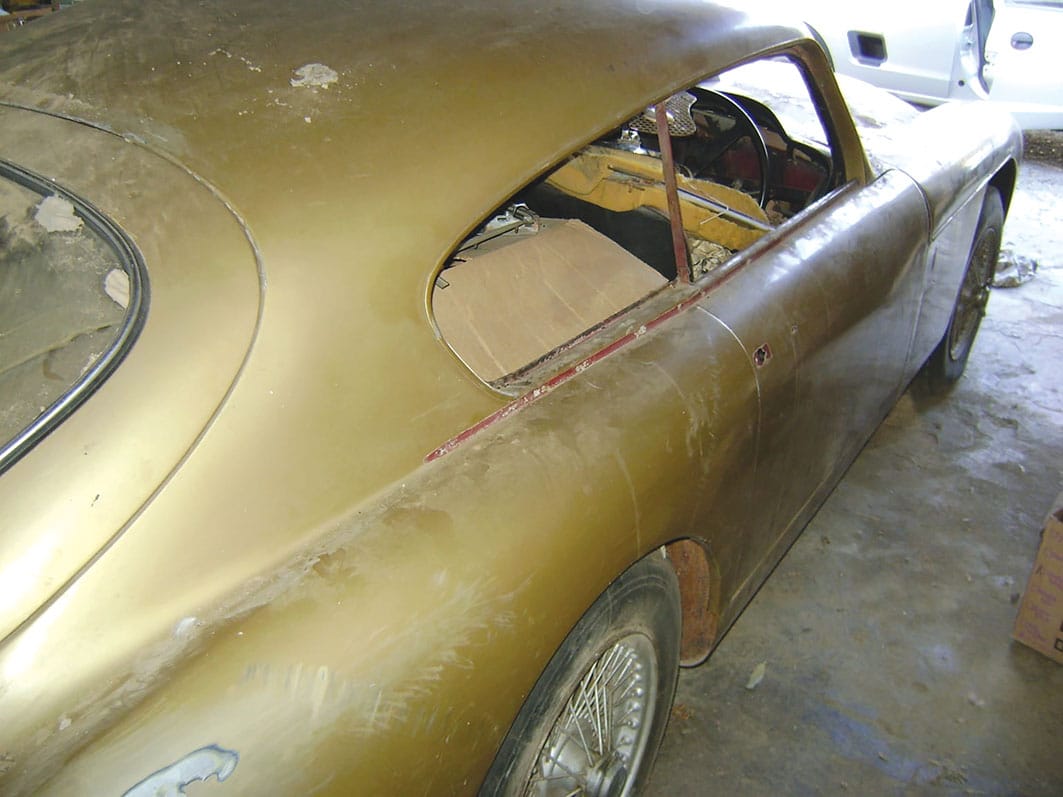
In fact, when this particular car was discovered in a barn in Vanderbijlpark in 1977 Ð yes, this is a genuine barn-find car Ð it was actually painted gold, so its then-owner had obviously been aware of the 007 connection. Unsurprisingly it looked as if he had used a spray can for the job, and the rest of the Aston was absolutely trashed when it was discovered by a collector from Vereeniging called Leon Hoffman. Hoffman planned to restore the car but never got around to it. His mate Ron Hollis, who had arrived in Vereeniging from Zimbabwe in 1977 around the same time that Hoffman discovered the Aston, had been smitten by the pile of rubbish that had cluttered Leon’s garage for seven years, and in 1984 he took possession of one of just three Aston Martin DB 2/4 Mk IIIs known to survive in South Africa.
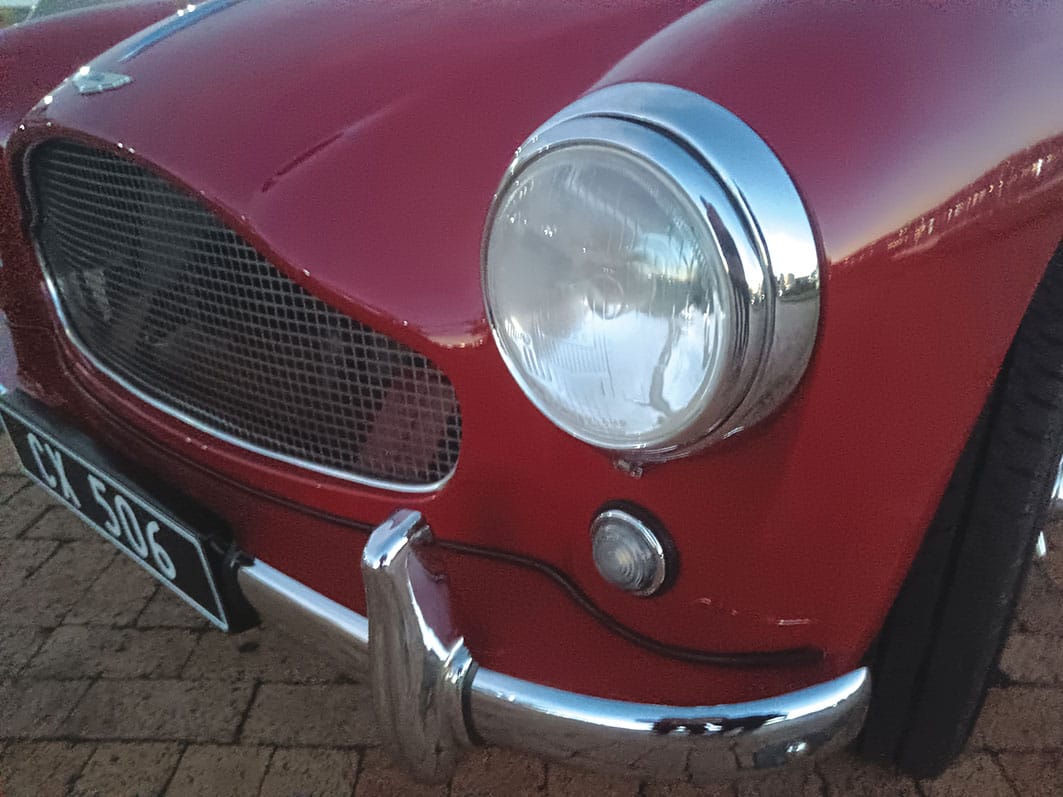
Hollis had just moved to Knysna at around that time and had nowhere to store his new obsession, so he left it on his brother-in-law’s farm outside Graaff Reinet in the Karoo, where it spent the next 15 years! Finally in 1999 he approached a Graaff Reinet restorer (it’s amazing that there are classic car restorers in Graaff Reinet) called Rick Zerwick to begin the mammoth task of turning this golden rotten egg into the beautiful red Aston Martin that you see in the pictures here. Rick’s son Carel did an amazing job on the aluminum bodywork that cloaks the DB Mk III’s steel spaceframe, and in a remarkably short space of time – just two and a half years – Ron Hollis had rebuilt the motor to absolute perfection and completed a task that had begun about 25 years earlier in that old barn in Vanderbijlpark.
“There were apparently five Aston Martin DB2/4 Mk IIIs that came to South Africa in 1958,” says Mark Barendse, who took ownership of this ultra-rare car a few years ago in Knysna from Ron Hollis. “Three of the cars – including mine, which is chassis number AM/300/3/1444 – are in the international Aston Martin registry, but the whereabouts of the other two cars remains a mystery.”
Hollis carried out a thorough rebuild of the straight-six-cylinder twin cam 2,9-litre engine and added his own knowledgeable touches. Larger sleeves and pistons have brought the capacity up to a full 3.0 litres and upgraded the engine to a special performance spec that was available from the Aston Martin factory between 1957 and 1959 (the DB2/4 Mk III’s production years) that included longer duration camshafts, competition conrods and a branch exhaust manifold. The focal point of the engine bay when you lift that forward-hinging bonnet today is the set of three Weber 40DCOE carburettors that were also part of the special factory competition-spec engine that was fitted to just six of the original run of 551 cars.
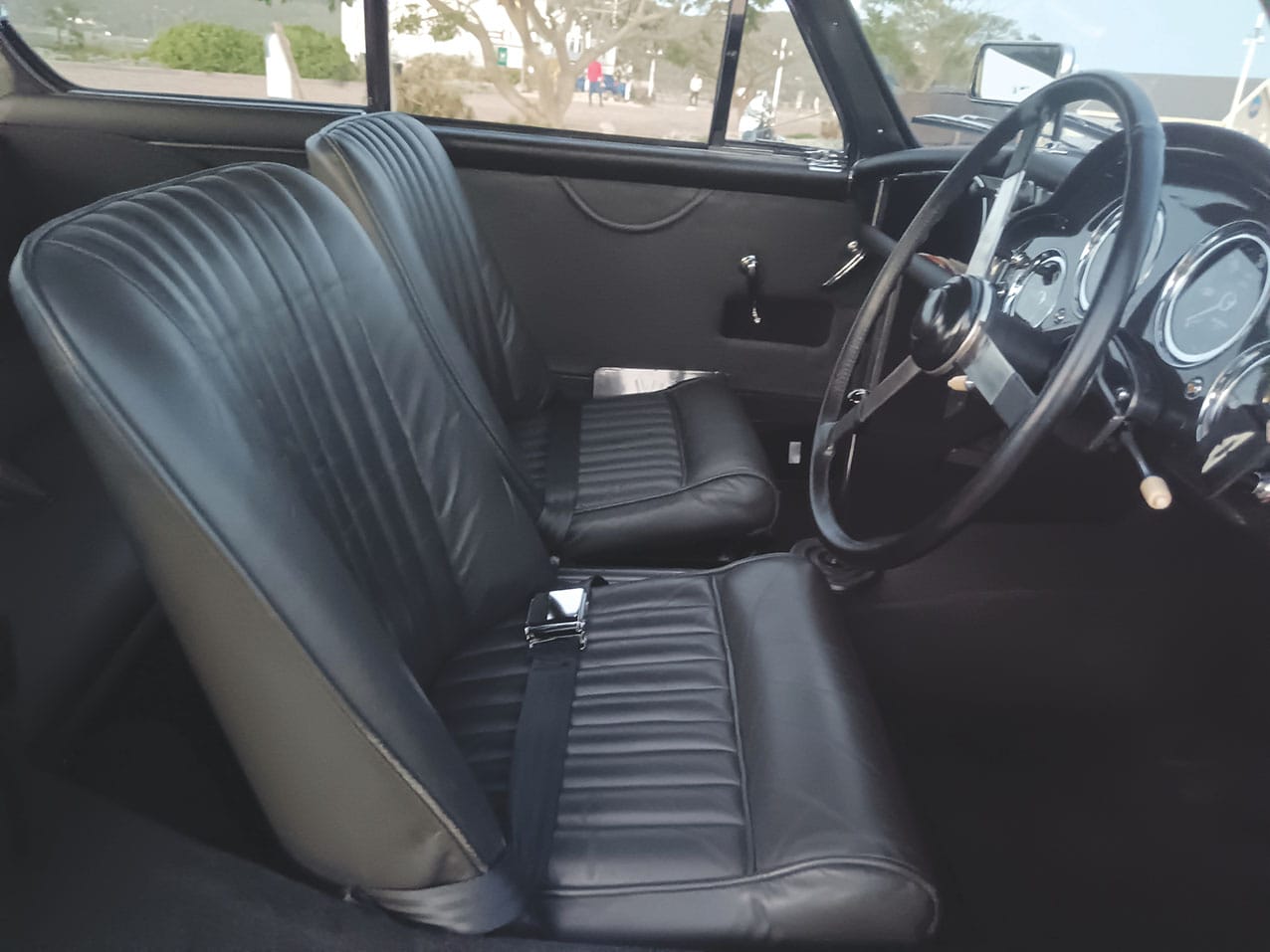
Everything about this car – absolutely everything – is achingly beautiful. The upholstery was done by a local trimmer in Graaff Reinet and is superb in its shape, fitment and stitching. The three-spoke old-fashion steering wheel is large in diameter and dictates an almost sit-up-and beg driving position that is quaint by 2025 standards, while the gearshift action – already referred to as Mark worked the rifle-bolt action across the gate from second to third – is totally befitting in a car that speaks just as much of muscle as it does of elegance.
The paintwork today is in its original red and appropriately is of the period-correct enamel variety. Ron Hollis was not going to make the crass mistake of specifying a modern two-pack paint on a timeless classic like this British icon, which is fronted by the classic-shaped Aston grille that was first seen on their racing cars in the 1950s, and famously accompanied the smiles of Carroll Shelby and Roy Salvadori when they took that famous Le Mans 24-Hour win in a DBR1 racer in 1959.
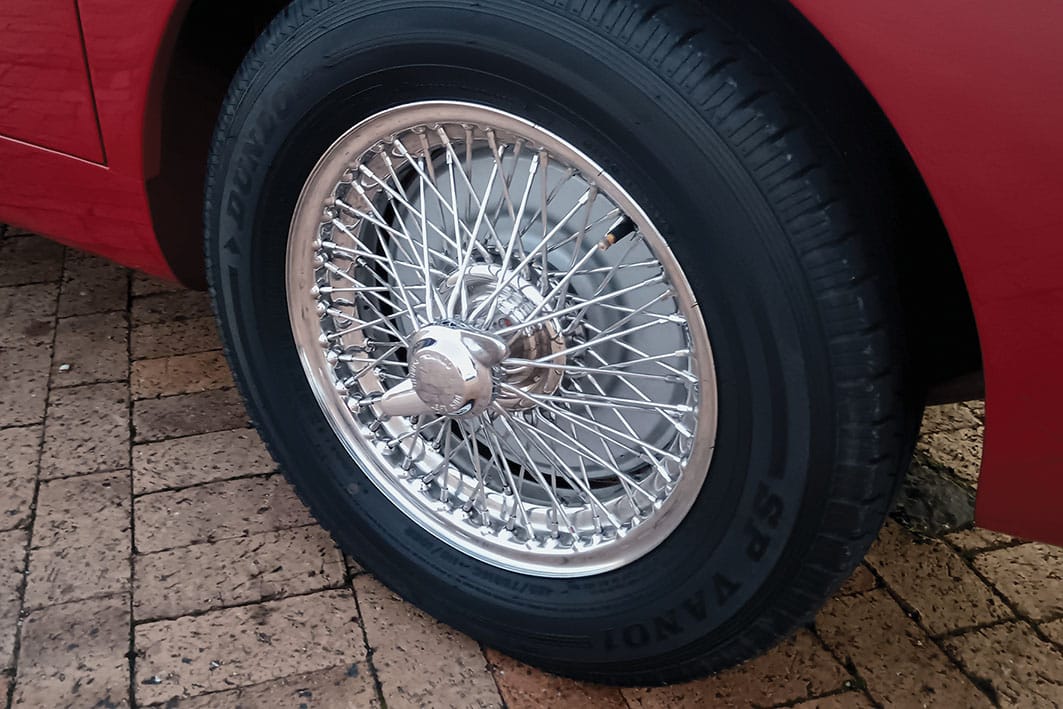
As for details, well, every single one of them is superb, both beneath the tilt-forward bonnet and regarding those that are seen more regularly. Those wire wheels, for instance, feature stainless steel spokes rather than chrome-plated items, and the flowing lines of the body, unadorned with any distracting trim lines, are complemented by the perfect fit of the doors with their tight shut lines.
So how does it feel for Mark to own one of the most beautiful cars in the world? Well, it’s a question that you are too afraid to ask, just as you would be if you asked Sophia Loren’s husband what it was like to be in bed with Italy’s most celebrated beauty.
There’s a reverence with which you regard this Aston Martin. But just like Sophia Loren, another star of the 1950s, there’s an underlying toughness, a sense of purpose, that simply makes the whole package even more attractive.
Story and pics by Stuart Johnston