HERE COMES THE 60’S
If ever there was a car that defined the best of American styling in the 1960s, that car was the Pontiac Tempest. Early in the decade Pontiac launched the Tempest as a compact car, which to almost everyone else in the world meant it was bigger than anything produced elsewhere, but not as huge as the biggest. From 1965 onwards, however, the Tempest had grown to what the Americans labelled as a “mid-sized” car, which meant it was now getting seriously big.
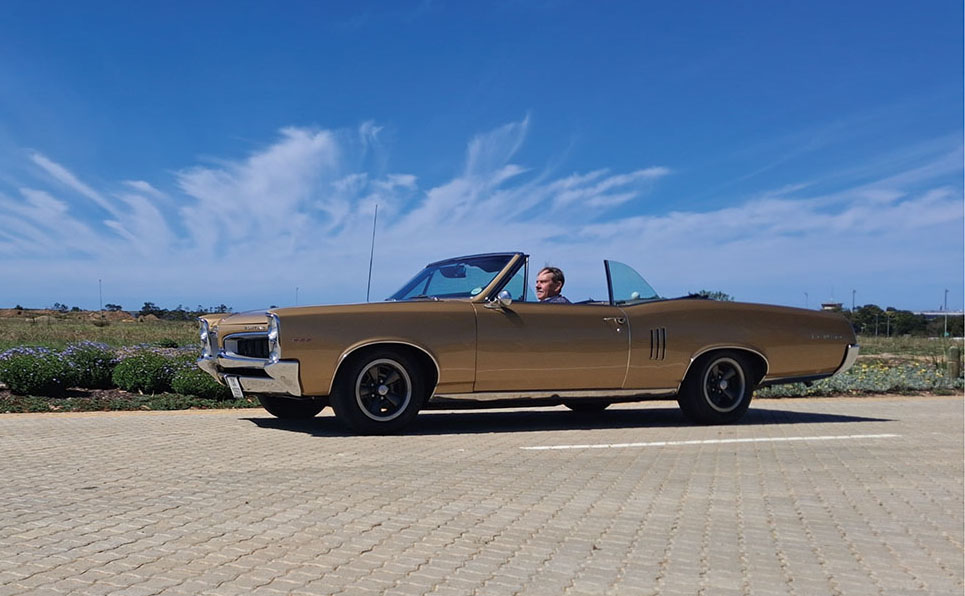
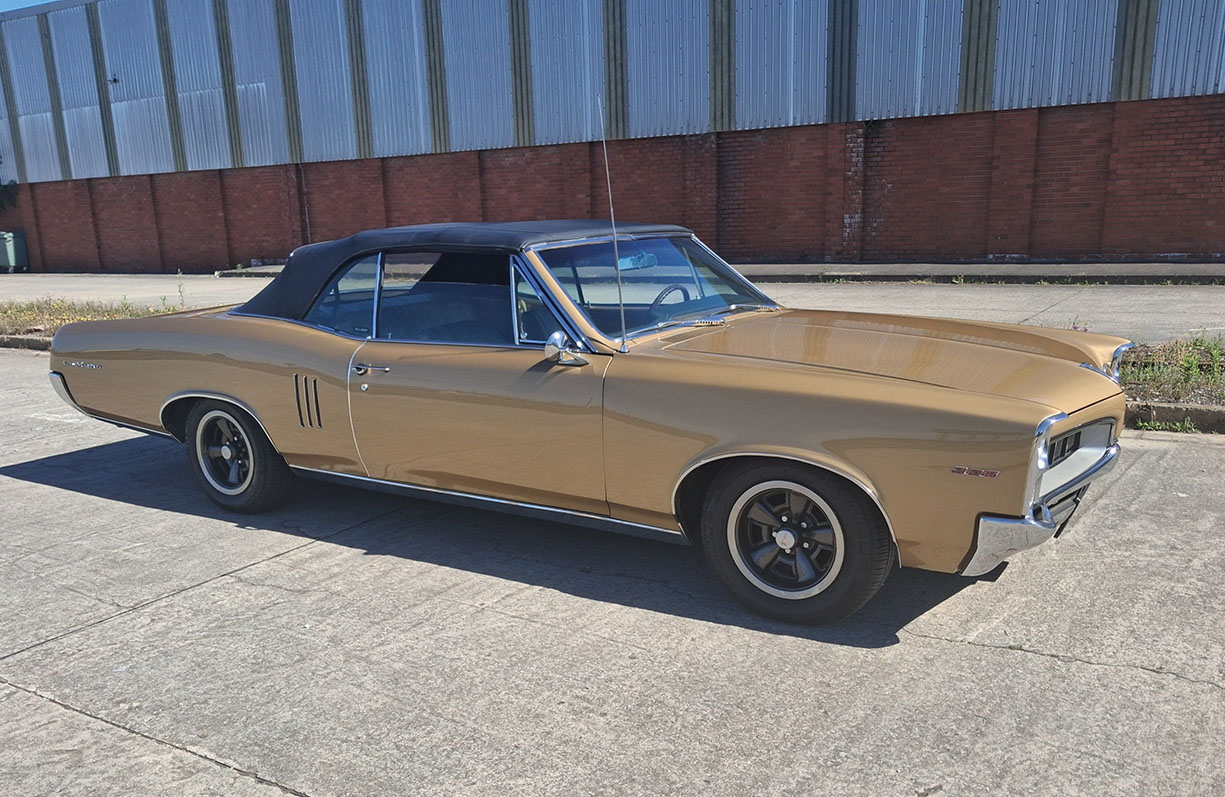
It wasn’t the size that defined the Pontiac Tempest, though, it was its curvaceous coke-bottle flanks. This particular car is a 1967 Pontiac Tempest Le Mans convertible, one of just over 9 000 produced in 1967, which means it is pretty rare by American standards. And in convertible form, the Tempest Le Mans at 206.6 inches in length (5,2 metres), gave just the right sweep to that coke-bottle curve line, curving gently up from the trailing edge of the door, before reaching its highest point before the wheel arch below.
From there it was a gentle descent to the long overhang of the tail section, an expanse of metal unbroken apart from the three metal styling accents on the rear flanks, that were subtle by the standards that had been in full swing only half a decade before.
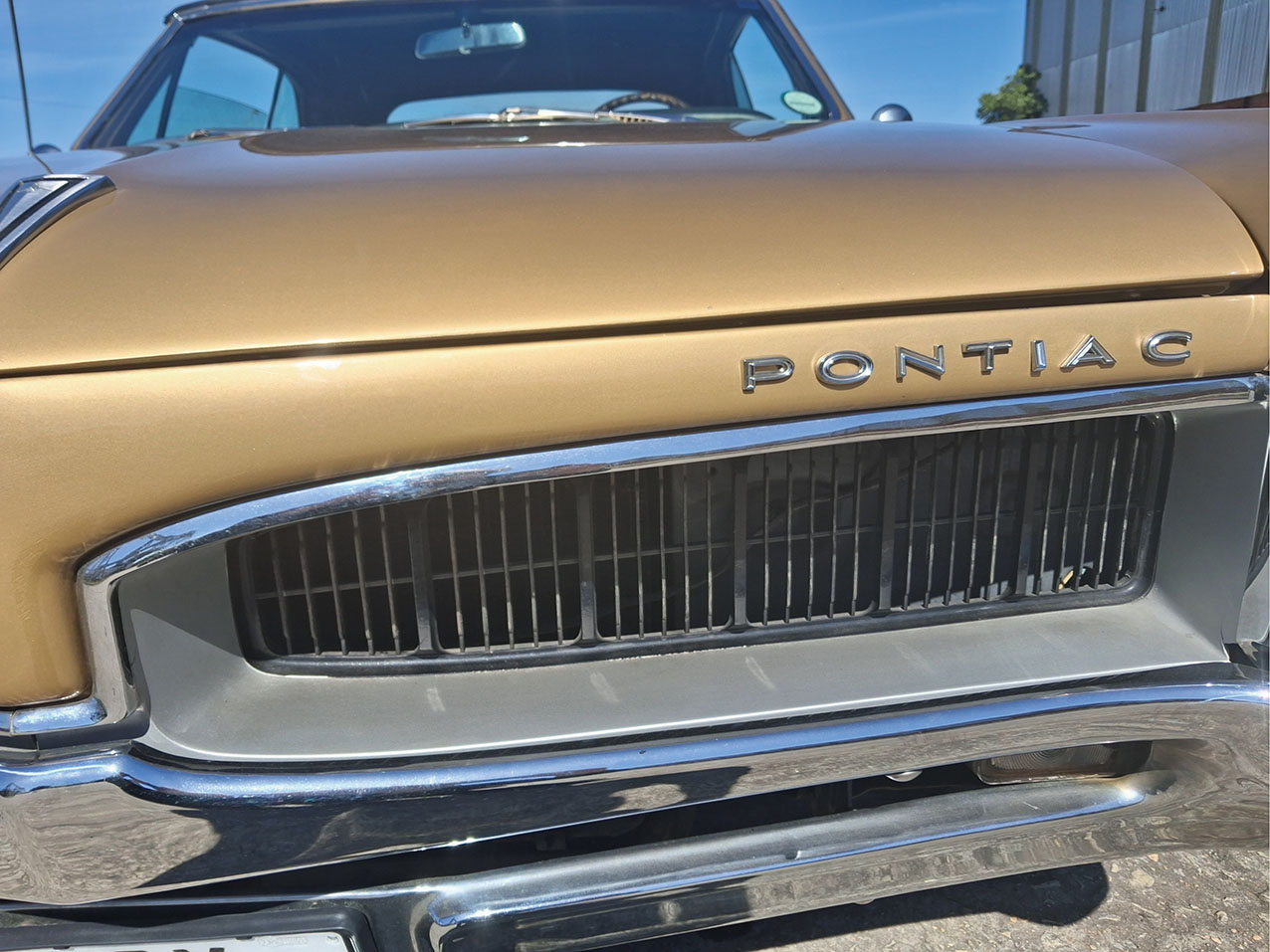
Balancing that coke bottle sweep perfectly was the clean, crisp styling of the front end, with its Pontiac signature stacked dual headlight arrangements on each corner. In keeping with the clean, understated form of the flanks was a radiator grille neatly divided into two sections, and the grille finished in matt black, to add further subtlety to the overall look.
Again, by American standards, the Pontiac Tempest Le Mans was the epitome of austerity, and what gave the Tempest range even more street cred, was the body style that launched Pontiac’s most famous model of all, the GTO.
The GTO had a 389 cubic inch (6,4-litre) V8 equipped in 1965 and ’66 with a set of three twin-choke carburettors that created a legend that is still revered today. It was a classic case of a hot, large capacity V8 slotted into a (comparatively) lightweight body to create an instant performance car, and that GTO nameplate would come to define all that was best about the Pontiac Division of General Motors’ vast automotive line-up well into the 1970s.
The second-generation Tempest Le Mans, built between 1965 and 1967, was considered a model for those customers who wanted the looks and the style of the GTO without the need for speed harnessed by the range-topping icon.
Thus the Tempest Le Mans convertible you see here is packaged with style uppermost in mind, and an electric-powered roof is merely the cherry on top of this stylistic masterpiece.
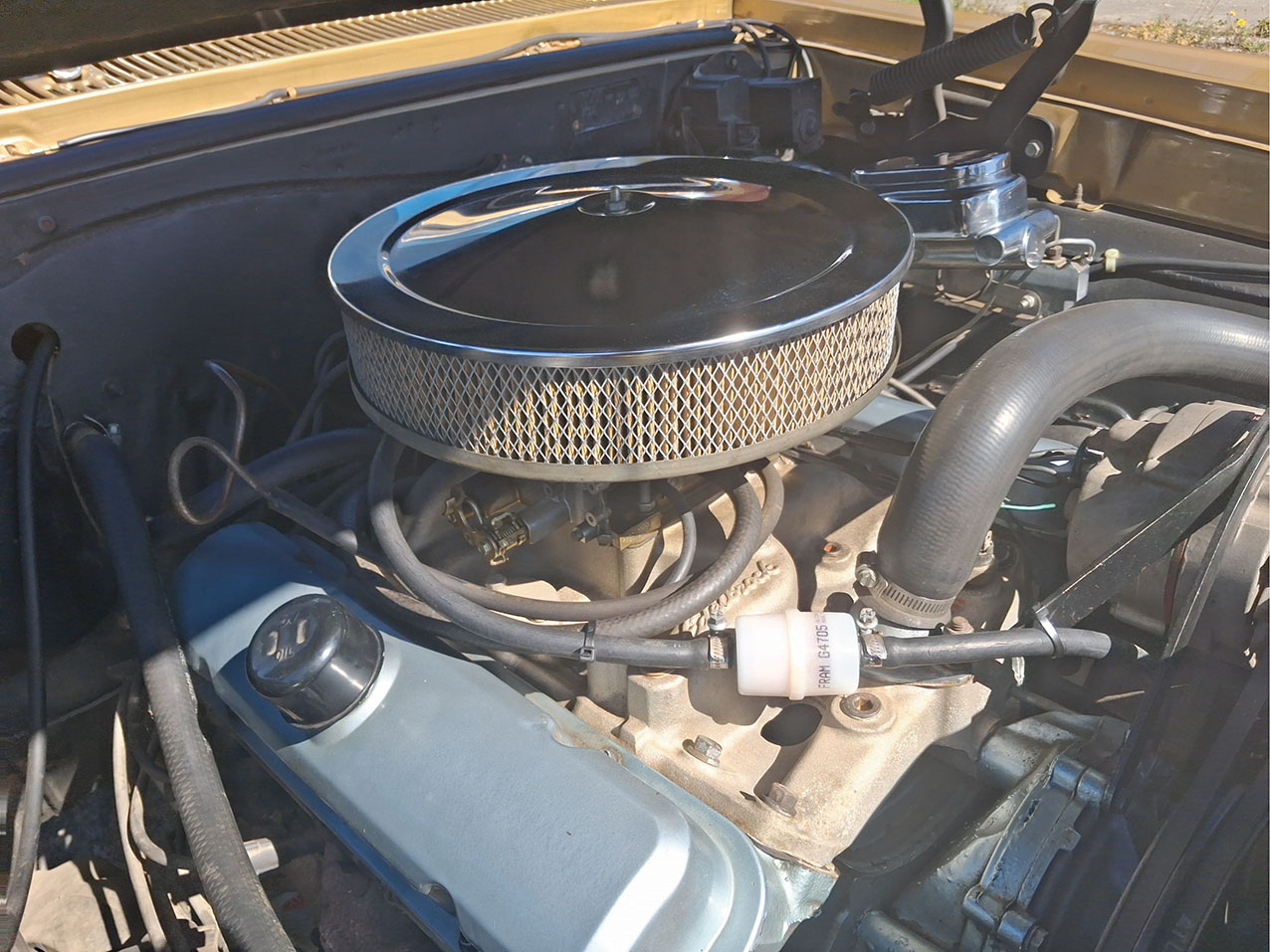
The engine fitted to this car is appropriately understated, for customers who preferred to become immersed in the scenery they were driving through, rather than trying to blast through to who knows where with wide eyes and whitened knuckles on the steering wheel. This car is fitted with a modestly-tuned 326 cubic inch V8 with a single two-barrel Rochester carburettor providing an adequate 250 horsepower (186 kW). By comparison, the GTO was endowed with 360 horsepower in its HO (High Output) version (268 kW).
With the Le Mans’ modest 326 cube V8’s torque peak of 450 Nm at just 2 800 rpm, there was no need for any trickery in the transmission department either, as far as the Pontiac Division was concerned. So both the sedan and convertible were supplied in standard form with a two-speed PowerGlide automatic gearbox that provided effortless if unspectacular thrust to the rear wheels located “somewhere back there”.
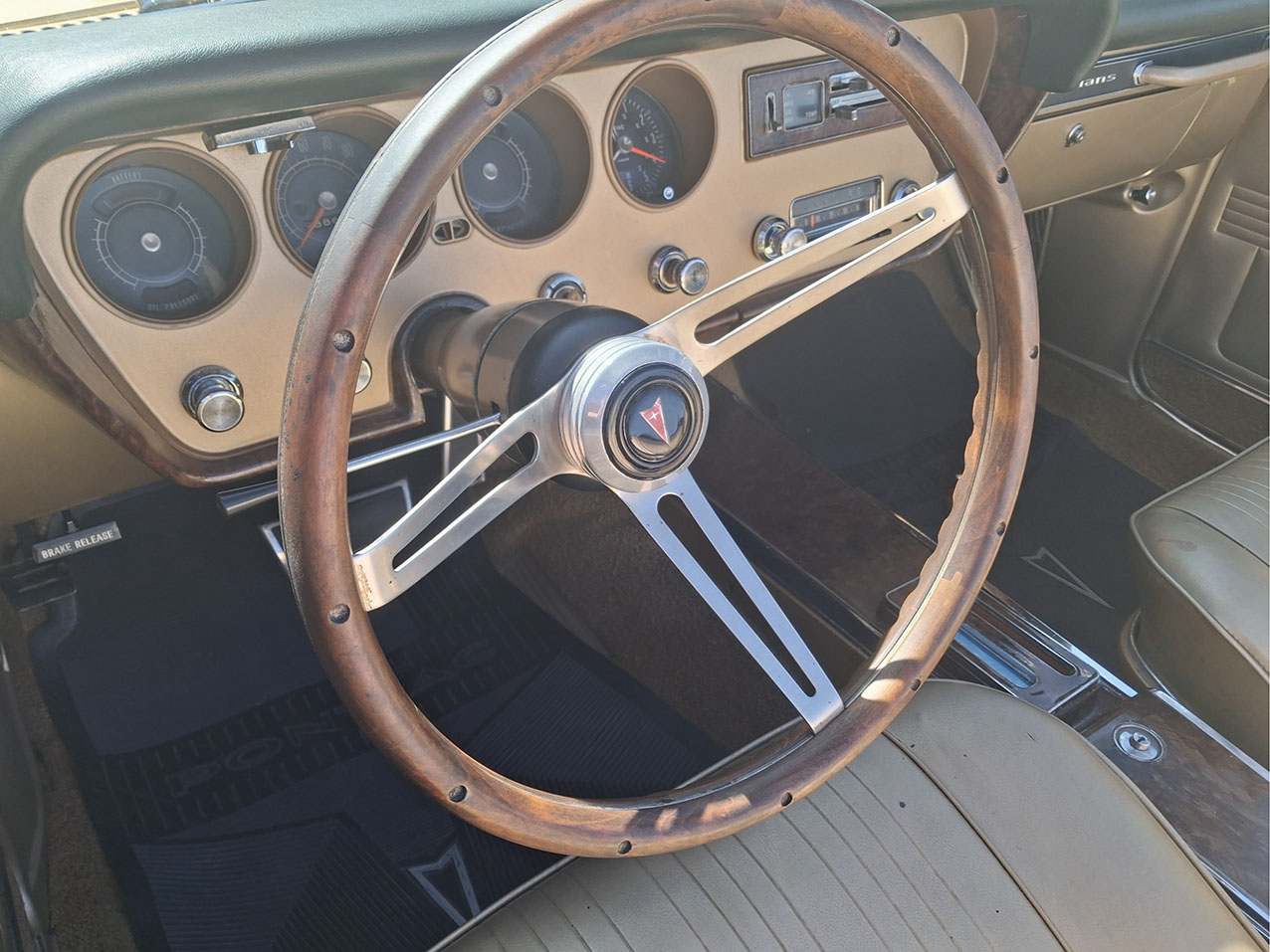
The car we drove, belonging to Kobus Mostert of Sedgefield, was appropriately fitted with the power steering and power brake options for the ’67 model year. And what this means in 2025, nearly six decades later, is that you have to learn pretty quickly that the steering is geared for many-many turns lock-to-lock, and although it takes hardly any muscle power, you have to crank in quite a few handfuls of rotation on that faux-wood-rimmed steering wheel to make sure you stay in the correct lane after negotiating a right-angled turn.
Once you get used to the steering, you find that this massive car is indeed effortlessly manoeuvrable, with a turning circle far smaller than you might first suppose. As for the brakes, well, they are drums all round, so you have to anticipate that on some occasions one of the front brakes may exert more pressure than the other, so you have to be ready to apply the necessary corrections to the steering wheel.
Other than that, it’s a case of unlatching the roof at the windscreen, sitting back as the sky unfolds in all its blueness above your head, and easing on the gas pedal to let the world begin wafting by you. I tend to drive these kinds of cars very slowly, because there is no point in trying to shave off a few seconds off your zero to 60 time (that’s miles per hour, bub, not km/h) in a car that is configured to sit back and relax.
The electric roof works perfectly and tucks away neatly, and the only thing we forgot to do was lower the left-hand-side rear window down for our photo session drive-by shots, as you will notice here. Trust me that all the windows, like the roof, go up and down the way John Z de Lorean intended them to (John Z was one rung below God in the GM hierarchy at that stage, as head of the Pontiac division. The stir he created with configuring the GTO as the world’s first muscle car would see him promoted to head up the whole General Motors conglomerate in the 1970s).
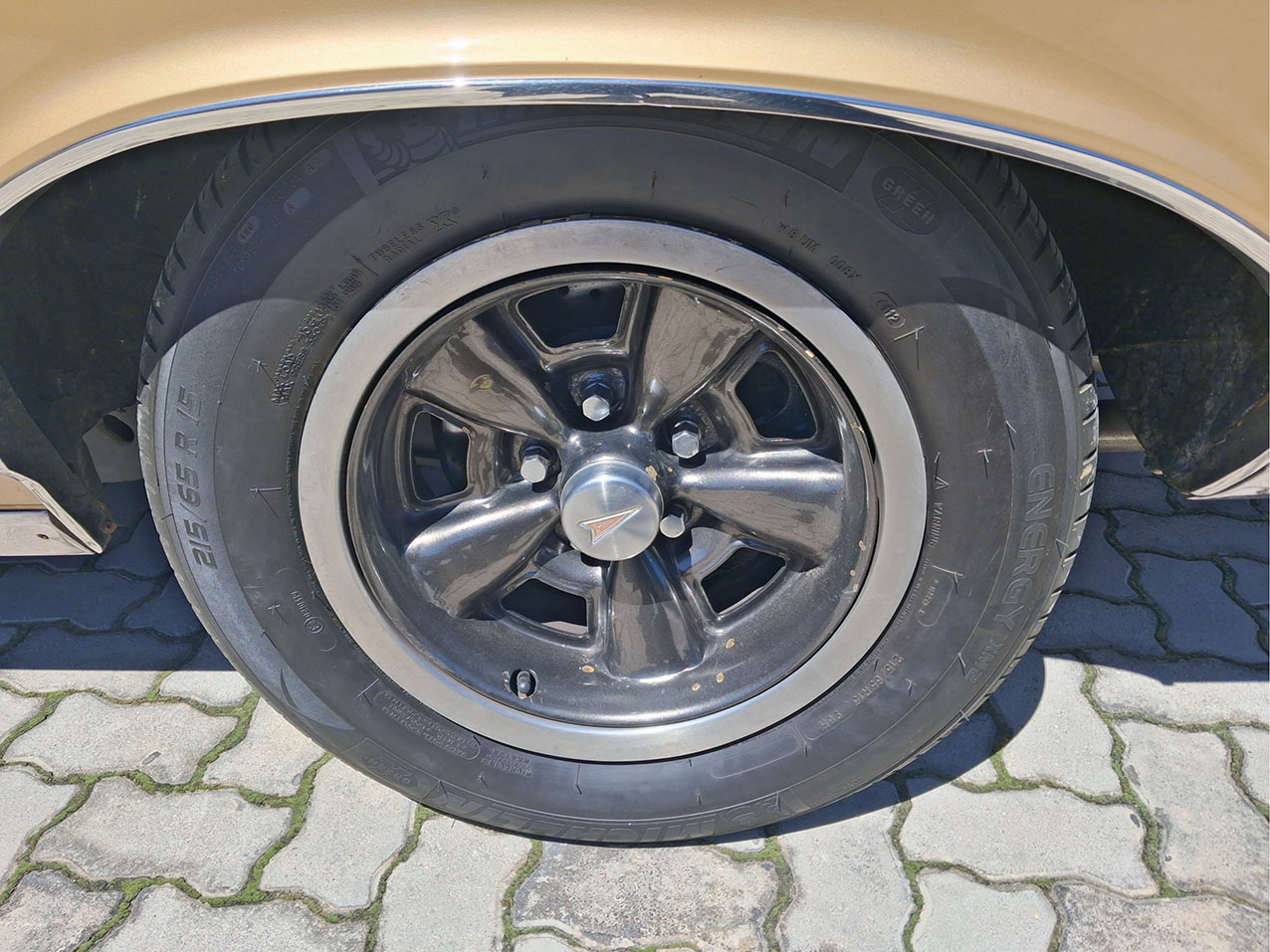
As for the rest, I enjoyed the subdued gold colour of this car’s pristine bodywork, and also liked the GTO-look optional wheels fitted to the car, which impart just the right degree of understated seriousness to this 60s style icon.
If it were mine, I wouldn’t change a damn thing. If unspectacular thrust to the rear wheels located “somewhere back there”.
Story by: Stuart Johnston
Pics by : Stuart Johnston