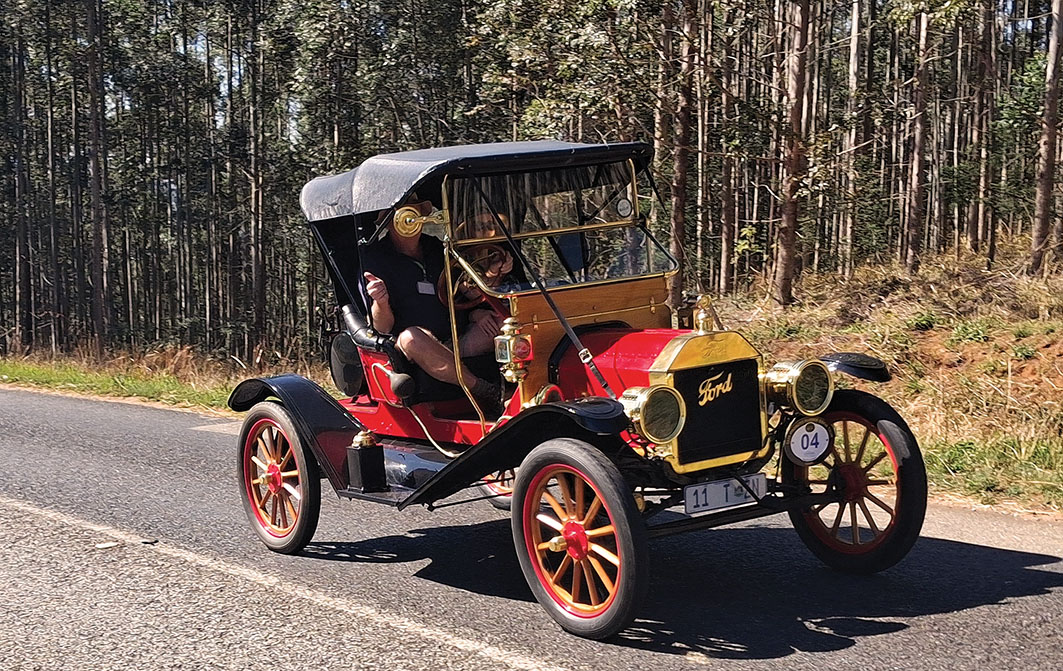
FORD MODEL T
I was sitting next to one of the stalwarts of the Ford Model T preservation movement in the country, when I mentioned that years ago I happened to own a Kawasaki triple, a motorcycle of fearsome repute. Kevin Casey asked me, “Which one, the H1 or H2?” At that moment it dawned on me that here was a man steeped not only in the history of the Model T, but was also a hard-core enthusiast of motoring Arcana that was perhaps known to just the two of us in that crowed room of old-timer enthusiast. And moreover, that enthusiasm for all things mechanical probably applied to everyone in the hotel dining hall.
It is that raw mechanical simplicity of the Ford Model T that is its huge attraction, not just the fact that most of them that survive in 2025 are well over 100 years old. The Ford Model T was produced between 1908 and 1927, and during that time an astounding 15 million of them were built, literally putting America on wheels, Henry Ford reduced the price of the of a Model T Ford from 800 dollars in 1908 to a little over 300 dollars. Imagine if Elon Musk, a man arguably as famous as Henry Ford in automotive history, had that kind of ethos today!
Ford also raised his workers’ take home pay from three dollars a day to five dollars a day. Responding to criticism from his rich shareholders that he was exhibiting Bolshevik tendencies, Ford replied that “It is not about profit. It is about giving something back to the community we live in.” Again, contrast that statement with the actions of Elon Musk, who has built his global popularity on the back of the electric car, and allowed him to amass a fortune of over 360 billion dollars – making him the richest man on the planet!
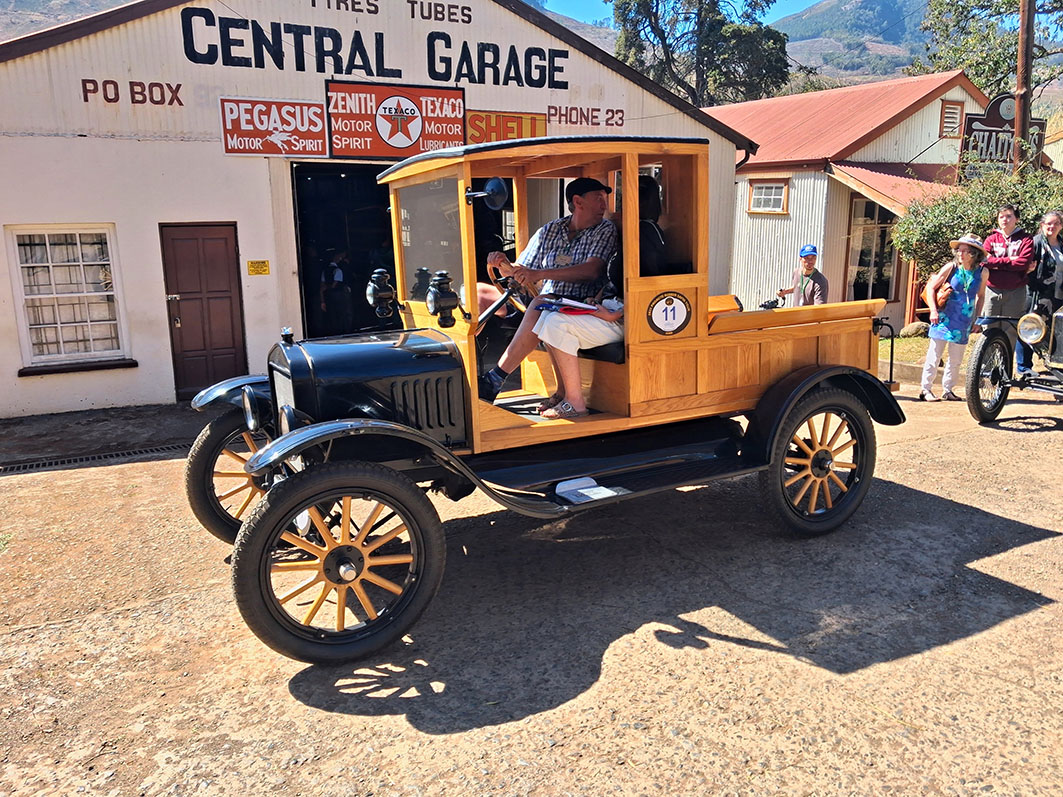
Mechanically the Ford Model T was simple, with a two-speed planetary gearbox, a side-valve four-cylinder engine that operated without the use of a water or an oil pump and used simple transverse leaf springs, developed on the horse-drawn cart that was still the majority’s form of transport when Ford revolutionised personal mobility, (a term that, incidentally would only be coined some 80 years after the last Model T was produced.)
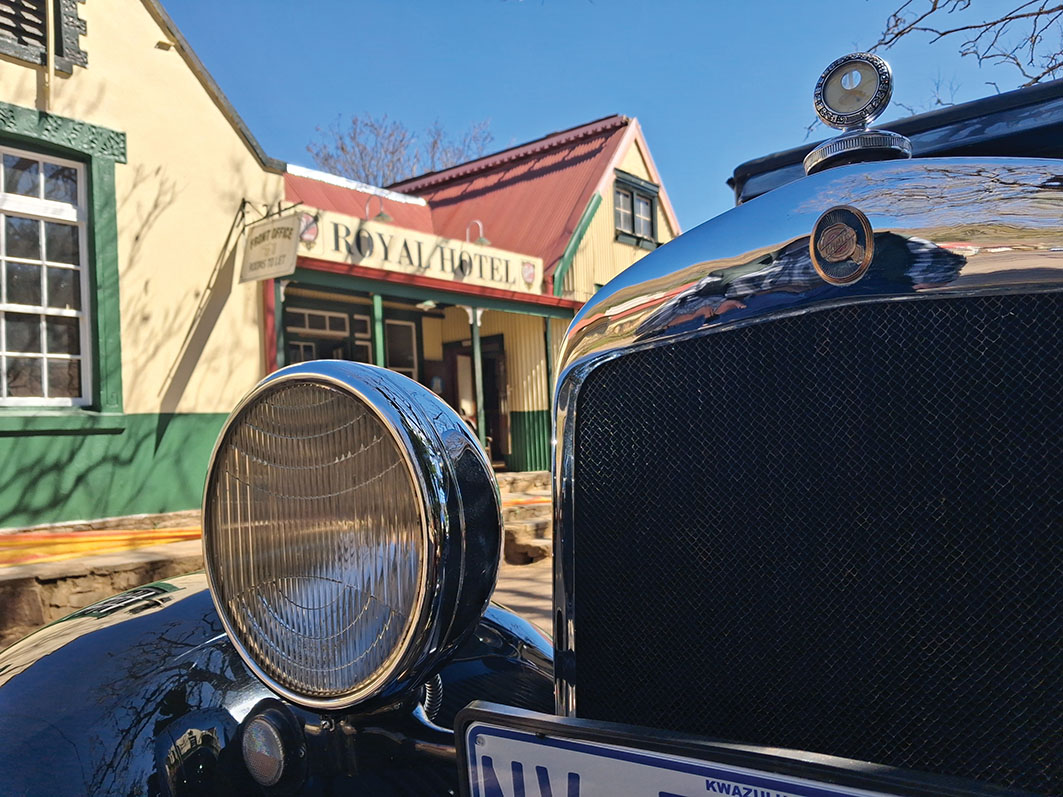
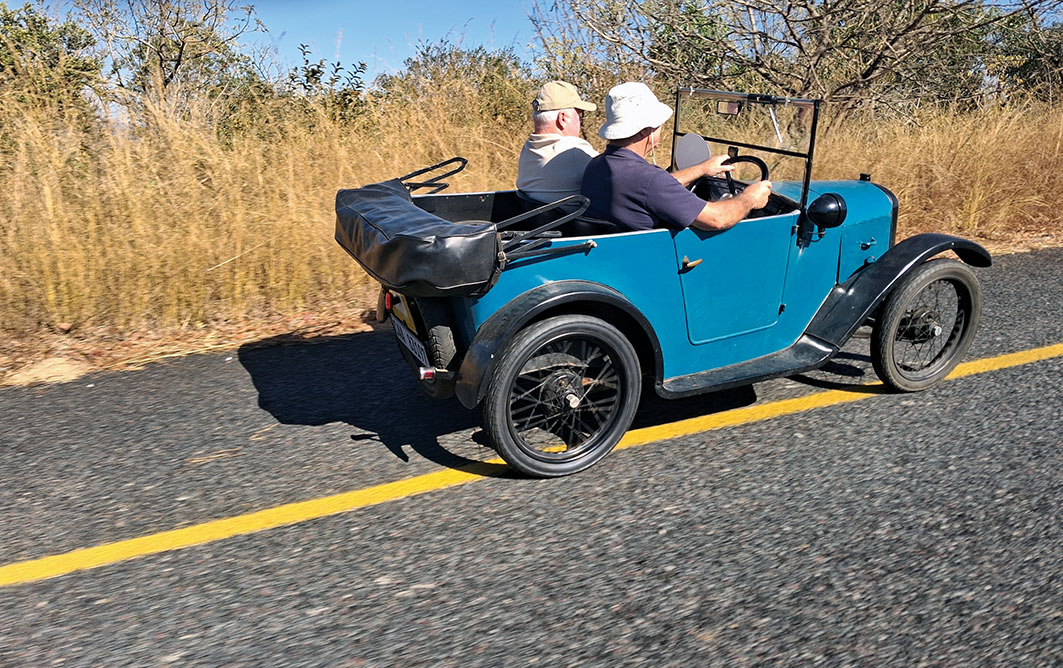
The basis of this article came when I attended the Pro Auto Rubber Tour in Mpumalanga in late August 2025. Some 20 vehicles were entered for this run with glorious scenery forming a backdrop to the cars that were all built before 1930. The vast majority of them were Model Ts with two Model A Fords – cars that immediately followed the Model T in 1920 – with a 1928 Austin 7 and a 1929 Chrysler adding non-Ford context to an event that was organised by the Model T Ford Club of South Africa.
The club is aware of some 100 Ford Model Ts that have survived in this country after about 8 000 were introduced here in the early 1900s. Incidentally, a Ford Model S, dating back to 1907, was crewed on the Tour by two women, driver Alison van Jaarsveld and Althea Purnell. The Model T Club is proud of the fact that its event cater for female participation in a wholesomely friendly atmosphere, illustrating the fact that Model T ownership is not an exclusive male preserve.
Make no mistake, driving a 100-plus year old car on public roads in 2025 is no frivolous undertaking. It requires profound dedication on the part of the owners, many of which are in their 70s and more than a few are now in their eighth decade! It also requires nerves of steel, to share a single lane road in a veteran car capable of just 60 km/h, with massive trucks that whistle past at speeds of up 120 km/h! Such an event would not be possible without sponsorship, and it should be noted that Pro Auto Rubber builds its nation-wide enterprise on rubber seals for classic cars. Other sponsors included Nelspruit Ford who provided back-up and media transportation for the event. Accompanying these delightful old horseless carriages as a media representative, I was transported back to a simpler time, highlighted by a stop-over in Pilgrim’s Rest, which has a well documented history that pre-dates the Model T Ford by a good number of decades!
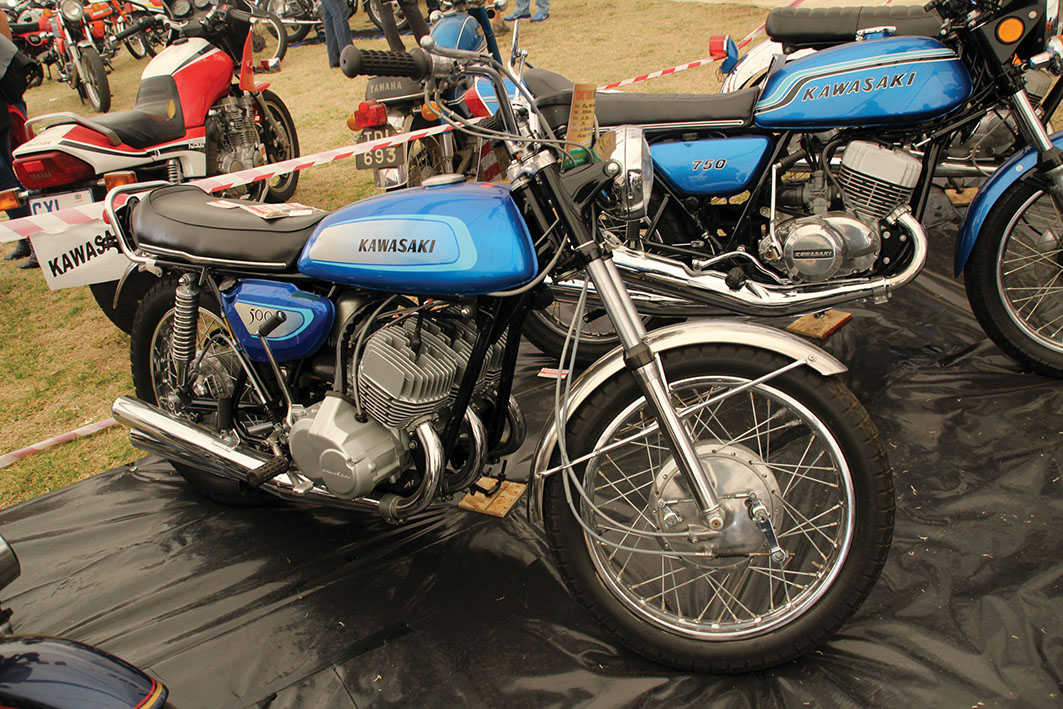
As for Kevin Casey’s question regarding whether I owned an H1 or H2, it refers to the 500 cc H1 Kawasaki, and the 750cc Kawasaki of the late 1960s and the early 1970s. These mechanically simple two-stroke machines were nicknamed the “widow-makers” because their unprecedented powers of acceleration were accompanied by frightening wheelies in a day when such things were unheard of on road bikes; handling that could be generally described as ‘ marginal’ and in the case of my H1 500, with drum brakes up front rendering braking that was purely incidental.
Kevin owns three H1s and at least one H2, and it’s remarkable that he and I survived to have a dinner-table conversation about risking our necks, with absolute delight, 50 years after we popped inadvertent wheelies and terrorised our respective neighbourhoods. Just as Model T owners may have done (minus the wheelies!) nearly half a century before Kevin and I were born…
Story and pics by Stuart Johnston