COATING DEFECT KNOW-HOW WITH DEBEER REFINISH
Coating defects are an inevitable challenge in the car refinish industry. DeBeer Refinish is here to help you tackle them with confidence.
Defects have many different causes – accidents, exposure to caustic substances, improper application techniques or incorrect composition of the paint. By helping you identify and reduce these issues, they empower you to consistently deliver high-quality results. Fewer defects mean greater efficiency, less rework and most importantly customer satisfaction.
Below are three defects with their cause, prevention and remedy.
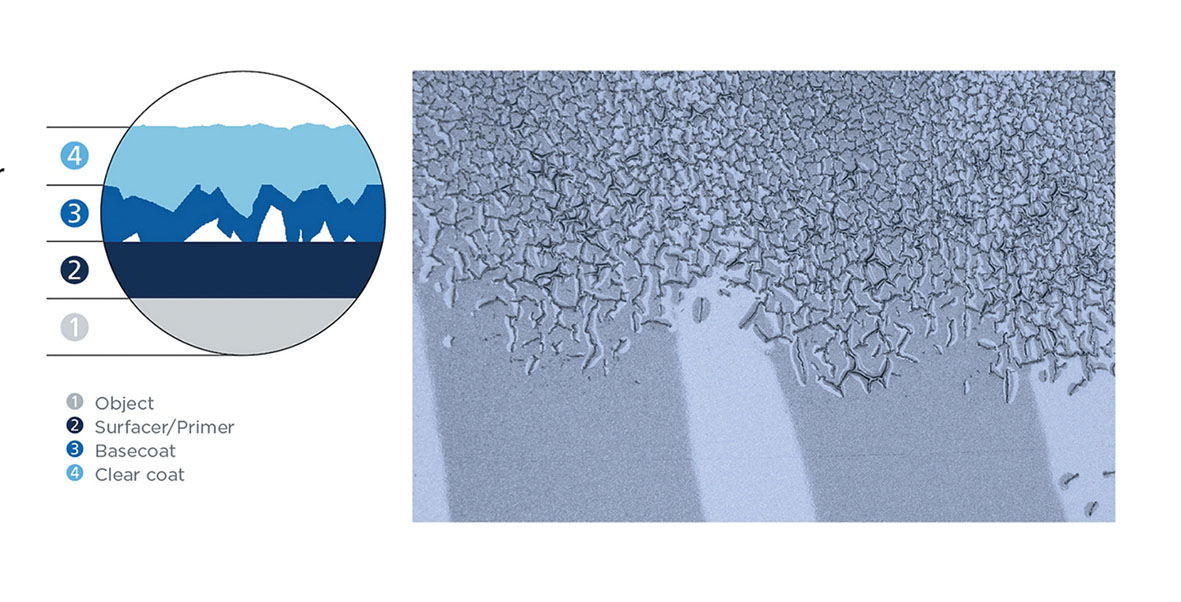
Lifting/Frying/Pickling
Swelling or lifting of previous layer(s) can occur during spraying, caused by partly dissolving previous layers.
Cause
- Incompatibility: the paint applied is unsuitable for the substrate.
- Degreaser too aggressive for substrate (primer, filler and/or topcoat).
- Possibly poor adhesion of the previous painted layer.
- Substrate not hardened thoroughly/not completely dry.
- Application of the paint system too heavy.
- Extraordinarily long flash-off time between coats. First coat with extra-long flash-off time is dissolved by next coat.
Prevention
- Always do a solvent test on/around the area to be repaired.
- Select suitable products for each substrate.
- Mix the products according to Technical Data Sheets and use correct spraying technique; do not overload.
- Use the correct drying times/temperatures.
- Apply the next coats directly after recommended flash-off time.
Remedy
- In case of minor lifting, sand down to a sound layer after drying. After sanding, apply the refinish system carefully again.
- Always spray sensitive substrates carefully:
- In thin coats and with sufficient flash-off time between each coat.
- In event of severe lifting, remove the layers completely before applying the new paint system.
Orange peel
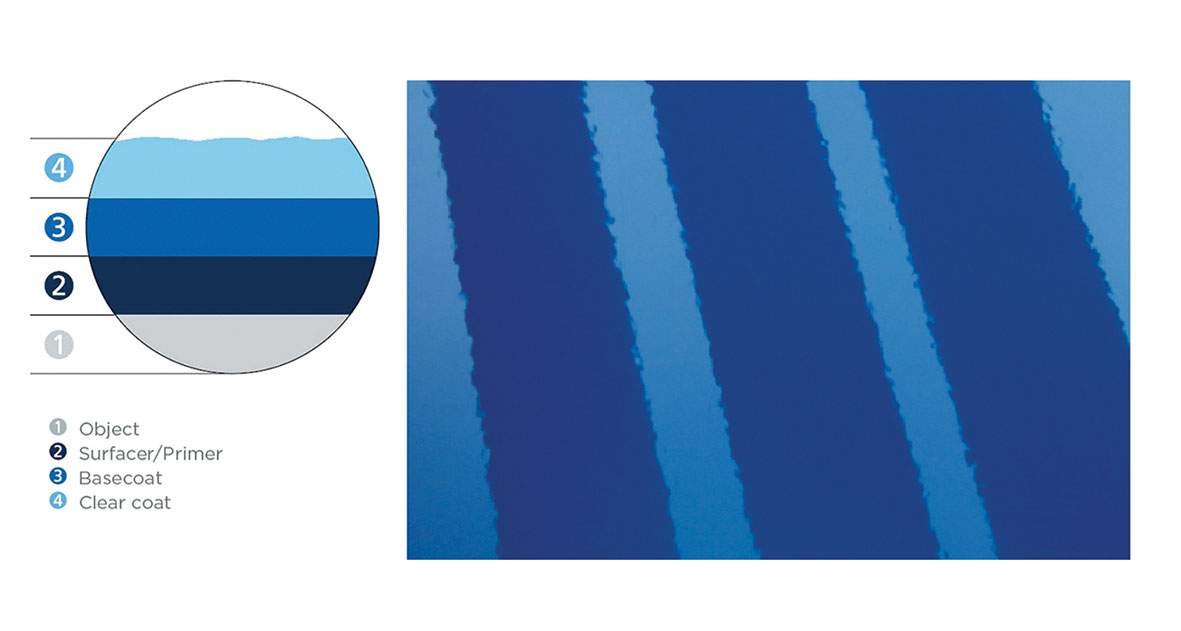
Freshly applied paint shows poor flow and looks like a skin of an orange (peel).
Cause
- Paint is too thick, spraying viscosity too high.
- Incorrect hardener, too fast.
- Incorrect thinner, too fast.
- Spraying pressure too high/too low.
- Spray gun set-up: nozzle size too big.
- Extremely high temperatures.
- Paint materials too cold.
Prevention
- Use the correct mixing ratio (use measuring stick or mix over scale).
- Check viscosity.
- Use recommended hardener and thinner for job size, temperature, and air flow.
- Apply products according to the TDS.
- Use correct spray gun set-up for products.
- Ideal spraying temperature is approximately 20°C.
- Avoid spraying at extremely high temperatures.
- Ideal storage temperature is approximately 20°C.
- Remedy
- Polishing will rectify minor orange peel effect.
- In case of severe orange peel effect, sand and re-spray the object.
Sanding marks
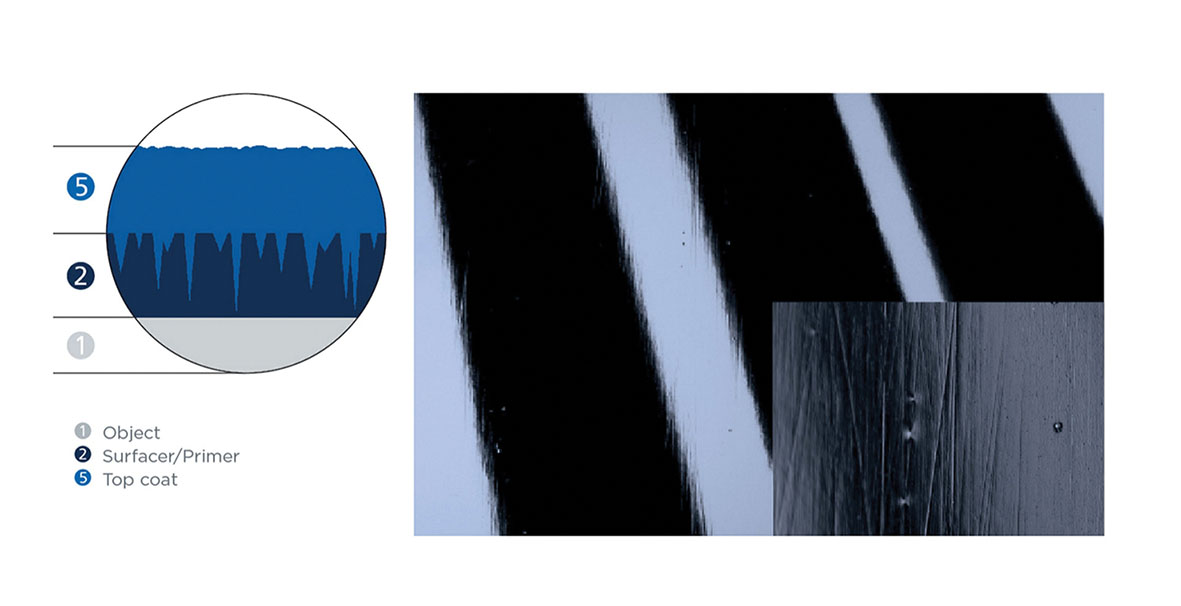
Fine/coarse scratches in different patterns, circular or random, can appear in the topcoat system, either immediately or after a while.
Cause
- Wrong sanding grade used, too coarse for the products applied subsequently.
- Insufficient drying/curing of the primer/surface/fillers.
- Contamination on the object causing scratches: coarse dirt particles, etc.
- Wrong sandpaper/sandpaper grit used for manual sanding.
Prevention
- Check TDS for correct sandpaper.
- Make sure primer/surfacer or filler is thoroughly cured/hardened through before sanding.
- Keep object to be painted clean, also during sanding.
- Use appropriate hand-sanding paper for manual sanding.
Remedy
- Thoroughly dry the paint system first.
- Sand substrate with correct sandpaper and sandpaper grit.
- If necessary, completely remove scratches from previous layer by sanding with the appropriate sanding grit and steps.
- If necessary, apply primer/surfacer/filler.
- Apply the topcoat system.