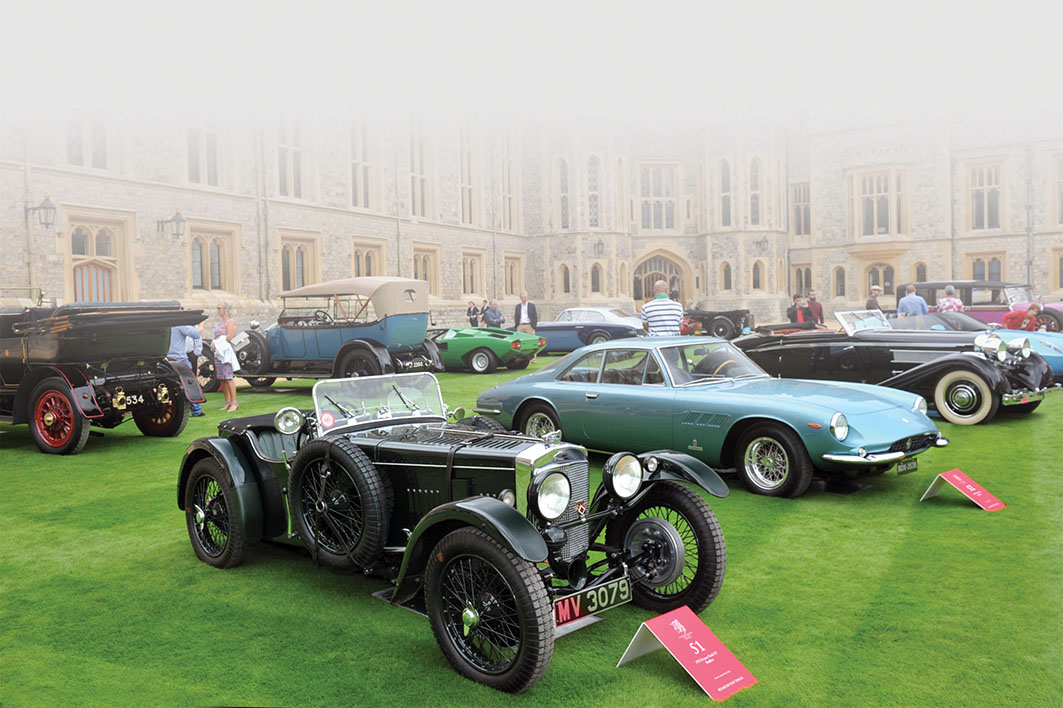
CLASSIC VEHICLES IN THE UK GAINING IN NUMBERS AND VALUE
Historic cars and motorcycles in the United Kingdom continue to grow in number and value, while providing a significant boost to the economy – estimated at £7.3 billion annually – and providing more than 34 000 skilled jobs. The survey reported that the average owner spent £4 567 a year on their vehicles, resulting in a total spend of £3.2 billion a year.
This is all detailed in the results of a recent national survey by the Federation of British Historic Vehicle Clubs (FBHVC). The organisation classifies cars and motorcycles 30 years and older as “Historic” while those aged between 20 and 30 years are given the new classification of “Young-timers”. One third of the surveyed participants owned a Young-timer.
The survey, which is conducted every five years, is reputedly the largest and most comprehensive of its kind in the world. This year it received input from 19 900 owners, enthusiasts, businesses, clubs, and members of the public with the FBHVC representing 500 member clubs, 51 museums and hundreds of individual members enthusiastic about older vehicles. (In the UK this includes buses, coaches, lorries, agricultural machinery, military, or steam vehicles).
Unfortunately, the motor clubs in South Africa do not have the resources to conduct a survey of this nature, but here we have a serious problem with a depleting number of historic vehicles as many are shipped out of the country for sale. Unfortunately, this includes many of particular significance and thereby highly valuable.
It is nevertheless interesting to learn about the growth being experienced by the historic vehicle movement in the UK.
According to the Driver and Vehicle Licencing Agency (DVLA) the number of historic vehicles registered in the UK currently stands at 1 934 178. There are an estimated 690 777 historic vehicle owners in the UK (up from 683 967 in 2020), with 9.7 million people in the UK who would like to own an historic vehicle. It is interesting to note that 88% of the owners of these vehicles belong to a motor club, with 20% of club members attending 10 or more events in a year.
The estimated value of the historic vehicle “fleet” in the UK has risen from £25.8 billion in 2020 to £35.1 billion in 2025.
A total of 4.3 million people said they had attended an historic vehicle event in the past year – a 100% increase over the data in the 2020 survey.
The movement supports 2 700 specialist businesses, collectively employing 34 500 people, across maintenance, restoration, parts supply, museums, and events. Nearly half of these businesses now offer apprenticeship programmes to pass on vital heritage skills.
Despite their visibility, historic vehicles account for only 0,2% of all miles driven in the UK annually, with the average historic vehicle travelling just 837 miles a year.
The average age of owners of historic vehicles has risen to 66, highlighting the importance of encouraging younger enthusiasts. Encouragingly, the under 35s now show the most significant growth in interest in historic vehicles, while the “Young-timer” category (vehicles aged 20-29 years) now offers an accessible entry point for new enthusiasts.
A total of 496 females participated in the survey. They owned an average of 2.4 vehicles each, with an approximate value of their collections being £60 971. Their favourite car brands were Morris, MG, Austin, Ford, and Triumph, while the most popular motorcycle brands were Triumph and Honda.
Respondents over 75 years of age said that Jaguar and MG are their favourite car brands, while Jaguar is also the most popular car brand among the Young-timers, with 13% of total. It is followed by MG, Mercedes-Benz, Land Rover, and BMW. Ford is the most popular brand with those under 35 years of age. It is followed by Audi, Mazda, Peugeot, Mini, and Subaru.
The survey showed that in terms of Young-timer motorcycles Honda was a clear winner with 20% of the total. It was followed by Yamaha, Triumph, Suzuki, Harley-Davidson, Kawasaki, BMW, and Ducati.
By Roger Houghton