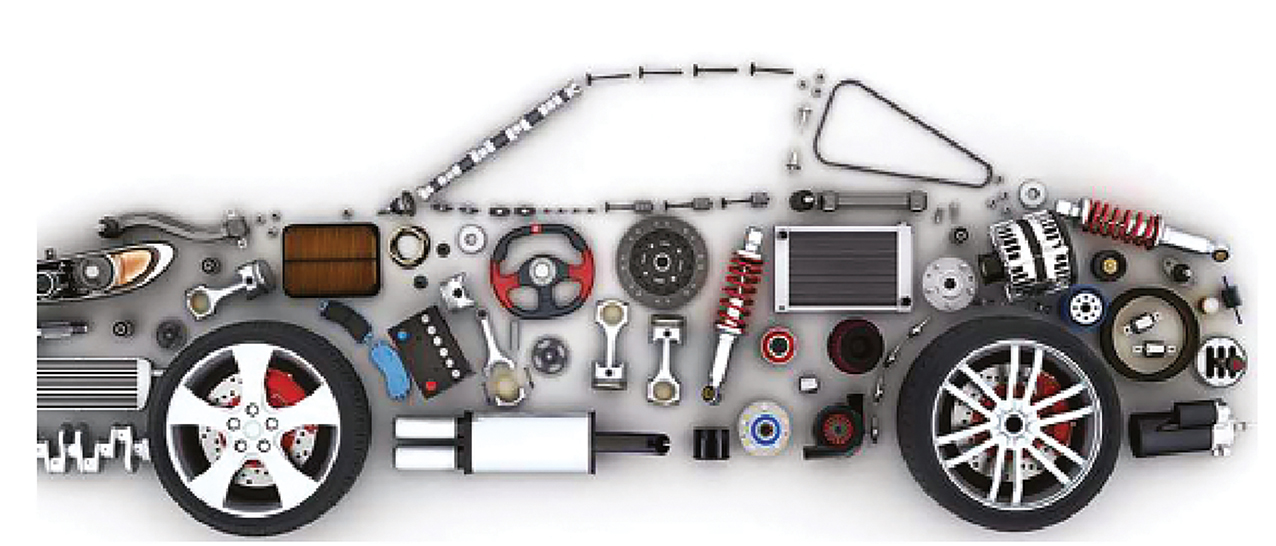
CAN VEHICLE PARTS BE STANDARDISED?
China has long standing problems with the private investment property market being directly linked to vast over capacity in the domestic automotive manufacturing sector, as the domestic market enters its fourth consecutive year of vicious discounting.
Hence the rush to keep production rolling, with a flow of Identikit SUV “new” models just to keep paying for loans on excess manufacturing capacity. A shipload of vehicles landed in Europe is demonstrably more profitable than if sold in the China domestic market – in spite of import duty increases.
So, what are the biggest problems for motor insurer underwriting and claims?
*More models and with even more variations chasing fewer sales per model compared to the ones they replace.
What are the most valuable bits of electrified powertrains?
Whereas internal combustion engine health can be determined by use of a few parameters due to the century of knowledge each parameter represents, some of which read across to electric powertrains (lubricant technology for example), the number of unknowns, the lack of data, is more marked with electrified powertrains – a situation rapidly correcting as more vehicles generate more information. In the same way, real-world battery capacity loss understanding is improving too.
The highest value parts, the easiest to assess in terms of remaining service life are the power control electronics, the traction motor and transmission.
In the near-term traction batteries remain the biggest risk for repairers and insurers. Quantifying how much life is left in a used battery pack is a challenge given it is difficult to manage each cell thermally. Hence the HV traction battery is built with cells with as close to identical performance as possible, so the degradation is uniform and the risk of overloading any single cell are minimised.
Identifying damaged or defective HV traction battery components prevents cell level imbalance that might initiate thermal runaway, which drives the needs to repair or refurbish assemblies.
The cost of a 100kWh battery should be around US$7 200 for the most part. Common li-ion electrolyte, anode and cathode cell combinations, which can retail for anything upwards of $28 000, newer and better battery technologies cost much more until production volumes increase.
Insurers know there isn’t a lot of quality information to use if the pack should be replaced or repaired – also known HV traction battery repairers are not yet common either.
The packaging of the HV traction battery, especially on a battery electric vehicle (BEV) or a range-extender electric vehicle (REEV), is super critical in terms of:
• Height, since the sides are defined by the engineered allowable intrusion for the Euro NCAP side impact tests.
• The front is defined by the engineered impact load transfer for the Euro NCAP front impact tests.
• The cabin height is defined by the 95th percentile audit.
• The underside is defined by the ground clearance line.
• The rear is defined by engineered load transfer from type approval and internal manufacturer impact test standards.
The HV traction battery is literally boxed in. Addition of full-length skid plates is possible if there is some latitude on the ground clearance line, so as the skid plate contacts and bends, it is spaced to prevent pressing into the battery it’s trying to protect.
Solid state and/or solid electrolyte batteries are full of promise in terms of energy density and resistance to internal shorting, but the technology has been “just around the corner” for at least a decade.
When it does finally appear, it is likely not to be cheap, nor significantly safer than a well-built and well-operated conventional lithium-ion cell pack.
For every one of the above reasons, the larger HV traction batteries remain platform specific and are likely to remain so for some time, until batteries can exceed the volumetric stored energy density of petrol or diesel. Unified cell formats might be possible, but the chaotic approach going on now is likely to be with us for 10 more years.
What is the European Commission doing about this?
The EU27 Commission were really rattled by Dacia Spring, which was originally engineered in India to become Kwid, then turned into a BEV by the Renault-Nissan team in China, by exporting the cars back to Europe once completed. A China built BEV sold by an EU manufacturer with BEV mandates set by the EU27 Commission.
The conundrum. How to keep trade, prevent import of complete vehicles but not upset China.
The EU27 Commission finally published at the third attempt as a definite maybe to start discussions in March 2026. Once again, the EU27 carbon credit trading scheme features, leading to all sorts of tiered effects and taxes.
As those discussions roll on, the wave of product coming in from China gets bigger every single day. The manufacturers in the EU27 and UK do not agree with what should be done, but all are aware right now that the main source of all the parts and material required to make electrified powertrains mostly emanate from China.
There is so much pressure to move supply of processed raw materials and finished products from China, but time is against the rest of the world, given China has a massive, massive manufacturing capability right now.
Unifying automotive engineering is not going to happen very much even within a single vehicle manufacturer. While we get some wins via platforms used across different brands, but collision repair is going to deal a significantly increased variety of models within so effect shorter life cycles… unless we can prevent that.
Isn’t repair a better ecology solution to just throwing whole vehicles away?
*Non-standardised major components, compounded by increasing market fragmentation.
by Andrew Marsh