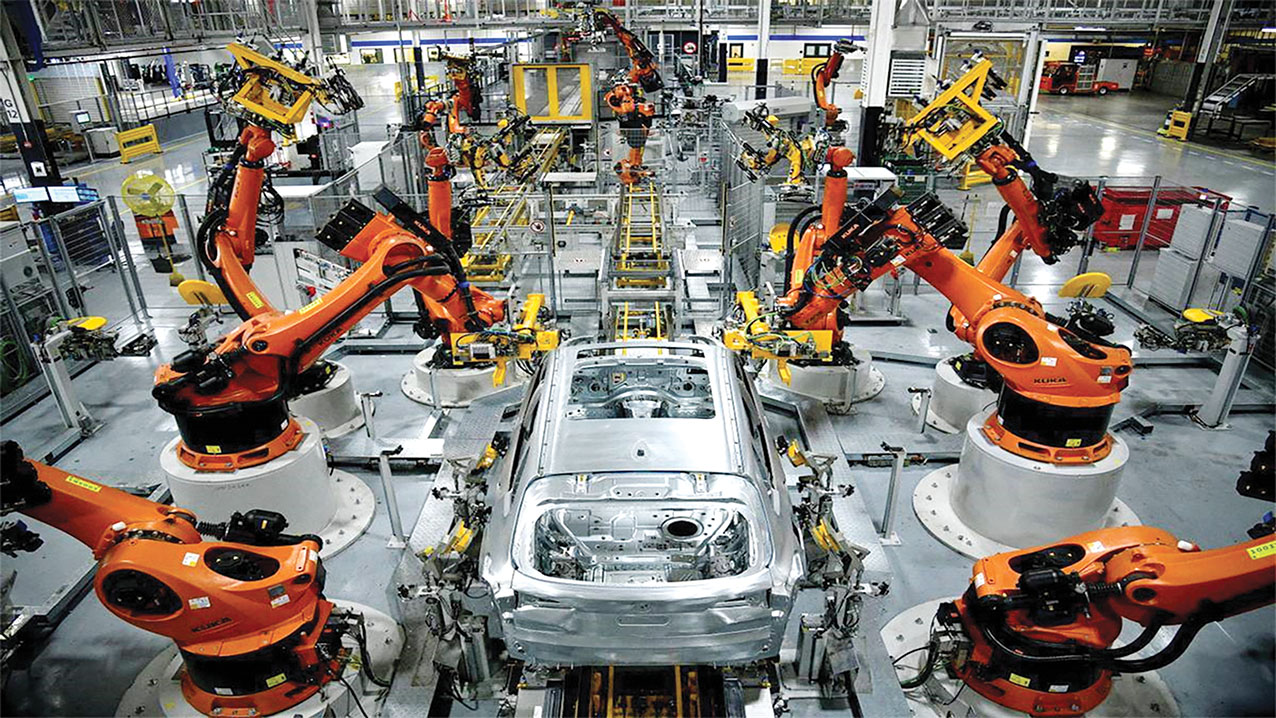
AUTO WEEK; SAW LOTS OF QUESTIONS BUT FEW ANSWERS
The fourth Auto Week conference organised by Naamsa, The Automotive Business Council, and staged in the Coega Special Economic Zone in Gqeberha over three days at the beginning of October – was a massive talk shop for the South African automotive industry. Unfortunately, the relevant, participating government bodies – including the attendance of Parks Tau, the Minister of Trade, Industry and Competition (DTIC) – did not reveal any concrete plans to ensure ongoing vehicle manufacture in South Africa.
Tau did allude to the fact that he saw an opportunity for South Africa’s automotive industry to work with the fledgling vehicle and component manufacturers in Saudi Arabia which he visited recently. (The first car assembly plant in Saudi Arabia was set up only two years ago by Lucid Air to build electric luxury cars, with an initial annual production volume of 5 000 units). Being a future supplier to Saudi Arabian companies could happen, but it is way down the road, and what we need is action now.
Tau also hinted that some of the newcomers or existing brands from China and India have expressed interest in local manufacture, starting with SKD and then switching to CKD. Let’s see if any of this happens because when setting up local manufacture one needs a healthy domestic market to take a significant percentage of locally made vehicles and components to ensure financial viability.
The South African domestic market has been stuck around half a million vehicle sales a year for many years now, so there is no growth. In addition, the current local manufacturing OEMs, except for Toyota, are having a tough time on the sales front, as they must now fight for market share with a host of additional imported brands, predominantly from China, as well as extended ranges from Indian vehicle makers.
This is also the case with several of the long-time importers such as Mazda, Honda, Volvo, Mini, together with Stellantis brands that include Peugeot, Citroén, Alfa Romeo, Jeep, and Fiat, all of whom are seeing shrinking sales figures compared to a couple of years ago. As a sideline, it is interesting to note that those brands assembled vehicles in South Africa from CKD packs in the past and all are now importers of built-up cars.
The existing local motor industry – particularly vehicle and component suppliers – are getting frustrated with the delayed response from government regarding future support programmes for the industry as they are unable to do any forward planning without knowing the amount and type of assistance that will come from government. This is endangering approval by their mother companies of upcoming projects due to the time lag.
The global automotive industry outside China and India is in turmoil, with several of the legacy brands, particularly those in Germany, in a dire financial state. This situation means the mother companies need to know exactly what the terms are for local manufacture in each country seeking participation in its motor industry before making localisation decisions.
The organised industry in South asked the DTIC to advance the review of the current Automotive Masterplan to 2025 instead of waiting for 2026, but at this stage the department has not even appointed consultants to assist with the project. (The industry representatives were hoping to have tentative regulations for solid discussion in October 2025).
The jam-packed Auto Week programme was somewhat ambitious, with presentations and panel discussions sometimes taking place at the same time on three different stages – Presidential Stage, Innovation Stage and Naamsa 90 Stage. Often presentations overran the published times, and it was difficult to catch up. As an example, Minister Tau and his entourage arrived an hour and a half late at the beginning of the second day’s activities which severely impacted the day’s programme.
I know there are a host of topics that can be covered during such an annual get-together, but this was information overload. Hopefully the programme for the 2026 Auto Week, to be held in eThekwini, KZN, will be simplified. Admittedly when there are more than 1 000 delegates, as was the case this year, it is accepted that they have varying interests, so maybe two stages, not three – might just be the answer.
Story by Roger Houghton